
Figs benefits for female health often go unnoticed, even though this small dry fruit contains nutrients that may support skin, energy, digestion, hormones, and fertility naturally.
Most people eat figs during winter, add them to milk, or snack on them occasionally without thinking much about their real health impact. But figs, also called anjeer, can be surprisingly beneficial for women when included regularly in a balanced diet.
And honestly, many women overlook them.
Skin issues, low energy, cravings, digestion problems, iron deficiency, hormonal imbalance, irregular periods, and fertility concerns are extremely common now. Diet plays a bigger role in these problems than many people realise.
That’s one reason many women now prefer consulting the best dietitian in Bangalore instead of relying on random wellness advice online. A personalised nutrition plan usually works far better than guessing what your body needs.
Figs are not magic. No food is.
Still, they contain nutrients that support women’s health naturally when eaten consistently as part of a balanced diet.
Here’s a breakdown of how figs benefit female health and where their effects are often misunderstood.
What Are Figs?
Figs are naturally sweet fruits rich in fibre, calcium, iron, antioxidants, potassium, and plant compounds.
They are eaten both fresh and dried. In India, dried figs are more common and are widely called anjeer.
Nutritionally, figs support:
- Digestion
- Energy production
- Bone health
- Hormonal balance
- Skin health
- Reproductive wellness
They also contain polyphenols and antioxidants that help reduce oxidative stress inside the body.
That matters more than it sounds.
Oxidative stress is linked with ageing, inflammation, poor skin health, and even certain fertility issues in women.
Nutritional Value of Figs for Women
Here’s what makes figs nutritionally valuable.
A small serving of dried figs contains:
- Dietary fiber
- Iron
- Calcium
- Magnesium
- Potassium
- Vitamin B6
- Antioxidants
- Natural sugars for energy
Figs are helpful for women with low iron or calcium intake and constipation.
Many women unknowingly fall short on these nutrients for years.
I’ve seen women focus heavily on weight loss while ignoring nutrient deficiencies completely. Eventually, fatigue, dull skin, hair fall, and irregular cycles start appearing slowly.
That’s where smarter food choices matter.
Figs: Benefits for Female Health
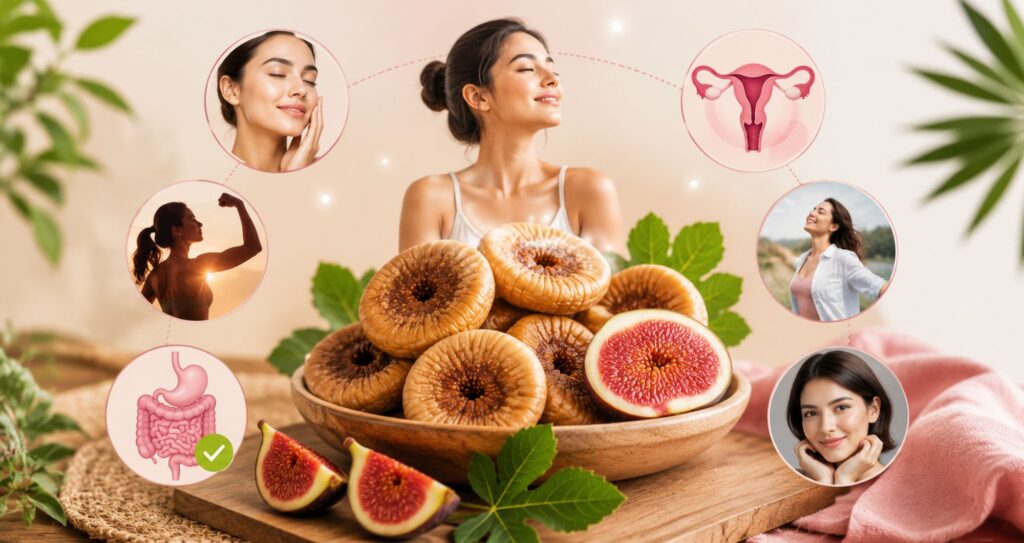
1. Figs May Support Hormonal Balance
Hormonal imbalance affects women in different ways.
Sometimes it appears as acne.
Sometimes irregular periods.
Sometimes, there are mood swings, cravings, bloating, or fatigue.
Diet alone cannot fix hormonal conditions completely, but certain foods support overall hormone function better than ultra-processed foods.
Figs contain:
- Fiber
- Magnesium
- Potassium
- Antioxidants
Fibre especially helps the body remove excess waste and supports better gut health. Gut health and hormone regulation are closely connected.
Women with poor digestion often experience worsening hormonal symptoms, too.
This is one reason experienced nutrition experts and the best dietitian in Bangalore often focus on gut-friendly foods before suggesting restrictive diets.
2. Figs Can Improve Skin Health Naturally
Many women spend heavily on skincare products while ignoring nutrition completely.
Skin reflects internal health more than people think.
Figs contain antioxidants that help fight oxidative stress. They also provide minerals that support hydration and collagen maintenance indirectly.
Some women notice improvements in:
- Dry skin
- Dullness
- Uneven texture
after improving their diet consistently.
Does eating figs suddenly create perfect skin overnight?
No.
But nutrient-rich foods help support healthier skin over time.
Figs also contain water-soluble nutrients and plant compounds that may help reduce inflammation inside the body. Chronic inflammation often contributes to skin irritation and premature ageing.
3. Figs Help Improve Digestion
Constipation is extremely common among women.
Low fibre intake, stress, irregular eating patterns, and dehydration all contribute to digestive issues.
Figs are naturally high in fibre.
Fibre helps:
- Support bowel movement
- Improve gut bacteria
- Reduce bloating in some cases.
- Increase fullness
- Support metabolism indirectly
Soaked figs are especially popular because they become softer and easier to digest.
Many women eat 2 to 3 soaked figs in the morning for digestive support.
Simple habits like this often work better than overcomplicated detox plans.
4. Figs May Support Female Fertility
This is one area where figs are discussed frequently.
Can figs directly increase fertility?
There is no strong evidence proving figs alone improve fertility dramatically. Still, they contain nutrients linked with reproductive health support.
Figs provide:
- Iron
- Calcium
- Magnesium
- Antioxidants
Nutrient deficiencies can negatively affect reproductive health over time.
For example:
- Low iron may worsen fatigue and menstrual health.
- Poor nutrition can affect ovulation.
- Oxidative stress may impact reproductive wellness.
Figs support overall nourishment, which matters for women trying to conceive naturally.
Many fertility-focused nutrition plans include dry fruits in moderation because they provide concentrated nutrients.
Still, fertility is complex.
Sleep, stress, thyroid health, PCOS, insulin resistance, exercise, and body weight also play major roles.
That’s why women trying to conceive often benefit from working with the best dietitian in Bangalore for a more personalised approach instead of relying only on individual foods.
5. Figs Can Boost Energy Levels
Many women constantly feel tired.
Sometimes it’s poor sleep.
Sometimes stress.
Sometimes there is an iron deficiency.
Sometimes under-eating.
Figs contain natural sugars along with minerals that support energy production.
Unlike heavily processed sugary snacks, figs also provide fibre, which slows sugar absorption slightly.
That makes them useful as:
- Pre-workout snacks
- Midday energy snacks
- Healthy sweet cravings replacement
Pairing figs with protein works even better.
For example:
- Figs with almonds
- Figs with Greek yogurt
- Figs with seeds
- Figs in oatmeal
Balanced snacks usually support stable energy better than sugary packaged foods.
6. Figs May Help During Periods
Periods can leave many women drained physically.
Some experience:
- Low energy
- Cravings
- Mood swings
- Weakness
- Digestive discomfort
Figs contain iron and magnesium, both important nutrients for women during menstruation.
Iron becomes especially important for women with heavy bleeding.
Low iron levels are more common than many people realise, especially among Indian women.
Some women also crave sugar heavily during periods. Figs can help satisfy sweet cravings more naturally compared to desserts or processed snacks.
7. Figs Support Bone Health
Women become more vulnerable to calcium loss as they age.
Bone health becomes increasingly important after the late 30s and especially after menopause.
Figs contain calcium and magnesium, which support bone function.
Now, figs alone are not enough for bone health.
You still need:
- Protein
- Vitamin D
- Exercise
- Sun exposure
- Overall balanced nutrition
But figs can contribute to better calcium intake naturally.
Fresh Figs vs Dried Figs
Both offer benefits, but dried figs are more concentrated.
Here’s the difference:
Fresh Figs
- Lower calories
- Higher water content
- Less sugar concentration
- More refreshing
Dried Figs
- Higher fiber
- More concentrated nutrients
- Higher natural sugar
- Easier to store
Most Indian households use dried figs regularly because fresh figs are less available.
Moderation matters, though.
Dried figs are healthy, but they are still calorie-dense.
How Many Figs Should Women Eat Daily?
For most healthy adults:
- 2 to 4 dried figs daily is usually reasonable
- Fresh figs can be eaten more freely because they contain more water.
The right amount depends on:
- Activity level
- Weight goals
- Blood sugar control
- Digestive health
- Overall diet
Women with diabetes or insulin resistance should monitor portion size carefully because dried figs contain natural sugars.
This is where personalised guidance from the best dietitian in Bangalore becomes helpful. Individual health conditions matter more than generic internet advice.
Best Ways to Eat Figs for Female Health
Here are practical ways women include figs in daily meals.
Soaked Overnight Figs
Popular for digestion and easy absorption.
Figs With Milk
A common traditional combination for energy support.
Figs in Smoothies
Useful for natural sweetness.
Figs With Nuts
Balanced snack option.
Figs in Oats or Yogurt
Adds fibre and texture.
Figs as Dessert Replacement
Helps reduce processed sugar intake in some cases.
Consistency matters more than fancy recipes.
Common Mistakes Women Make While Eating Figs
Eating Too Many Dried Figs
Healthy foods still require balance.
Too many dried figs may increase:
- Calorie intake
- Sugar intake
- Digestive discomfort
Ignoring Total Diet Quality
Figs help support health, but they cannot compensate for:
- Poor sleep
- Chronic stress
- Ultra-processed diets
- Lack of exercise
Depending on One Food for Fertility
Fertility support requires a broader approach.
Many women spend months trying random superfoods while ignoring medical testing or nutritional deficiencies.
That delays proper care sometimes.
Choosing Sugary Packaged Fig Products
Some packaged fig snacks contain:
- Added sugar
- Syrups
- Artificial ingredients
Whole figs remain the better choice.
Who Should Be Careful With Figs?
Figs are generally safe for most people, but moderation matters.
Women with these conditions should be cautious:
- Diabetes
- IBS or sensitive digestion
- Kidney issues requiring potassium control
- Certain food allergies
If you experience bloating or digestive discomfort after eating figs, reduce the quantity and observe your response.
Why Nutrition Matters More Than Quick Trends
Social media constantly promotes dramatic health hacks.
One week, everyone talks about detox drinks.
Then, collagen powders.
Then, extreme fasting.
But long-term health rarely improves through shortcuts.
Most experienced nutrition professionals focus on the basics consistently:
- Protein intake
- Fiber intake
- Sleep quality
- Stress management
- Hydration
- Movement
- Balanced eating
The best dietitian in Bangalore usually looks at your entire lifestyle instead of focusing only on one “superfood.”
That approach works better because women’s health is affected by multiple factors together.
Practical Daily Routine for Women Using Figs
A simple, realistic routine could look like this:
Morning:
- 2 soaked figs with warm water
Breakfast:
- Protein-rich meal with fiber
Midday:
- Balanced lunch with vegetables and protein
Evening:
- Fig and nut snack instead of processed sweets
Night:
- Proper sleep routine
Nothing extreme.
Nothing expensive.
Mostly consistency.
FAQs
Are figs good for female fertility?
Figs contain nutrients like iron, magnesium, calcium, and antioxidants that support overall reproductive health. They may help as part of a balanced fertility-friendly diet, but they are not a standalone fertility treatment.
Can figs improve skin naturally?
Figs provide antioxidants and minerals that support skin health indirectly. Consistent healthy eating usually contributes more to skin quality than relying on skincare products alone.
How many figs should a woman eat daily?
Most women can safely eat 2 to 4 dried figs daily as part of a balanced diet. Portion size depends on activity level, calorie needs, and blood sugar control.
Are soaked figs better than dry figs?
Soaked figs may feel easier to digest for some people. Soaking also softens fibre, which some women prefer for digestion support.
Can figs help with periods?
Figs contain iron and magnesium, which may support energy levels and nutrition during menstruation. They may also help satisfy sweet cravings more naturally.
Are figs good for PCOS?
Figs can fit into a balanced PCOS diet in moderate amounts. Portion control matters because dried figs contain natural sugars.
Do figs increase weight?
Eating excessive amounts of dried figs may contribute to higher calorie intake. Moderate portions usually fit well into healthy diets.
What is the best time to eat figs?
Many women prefer eating soaked figs in the morning or using them as balanced snacks during the day.
Final Thoughts
Figs are one of those foods people underestimate quietly.
They support digestion, energy, skin health, and overall nourishment when included consistently in a balanced diet. They also provide useful nutrients for women dealing with fatigue, low fibre intake, or poor eating habits.
Still, no single food transforms health completely.
Your daily routine matters more.
Sleep matters.
Stress matters.
Movement matters.
Overall nutrition matters.
That’s why many women eventually seek support from the best dietitian in Bangalore instead of chasing random wellness trends online. Personalised nutrition usually produces more realistic and sustainable results.
Small, consistent habits often work better than dramatic changes.
And honestly, that approach feels much easier to maintain long term.