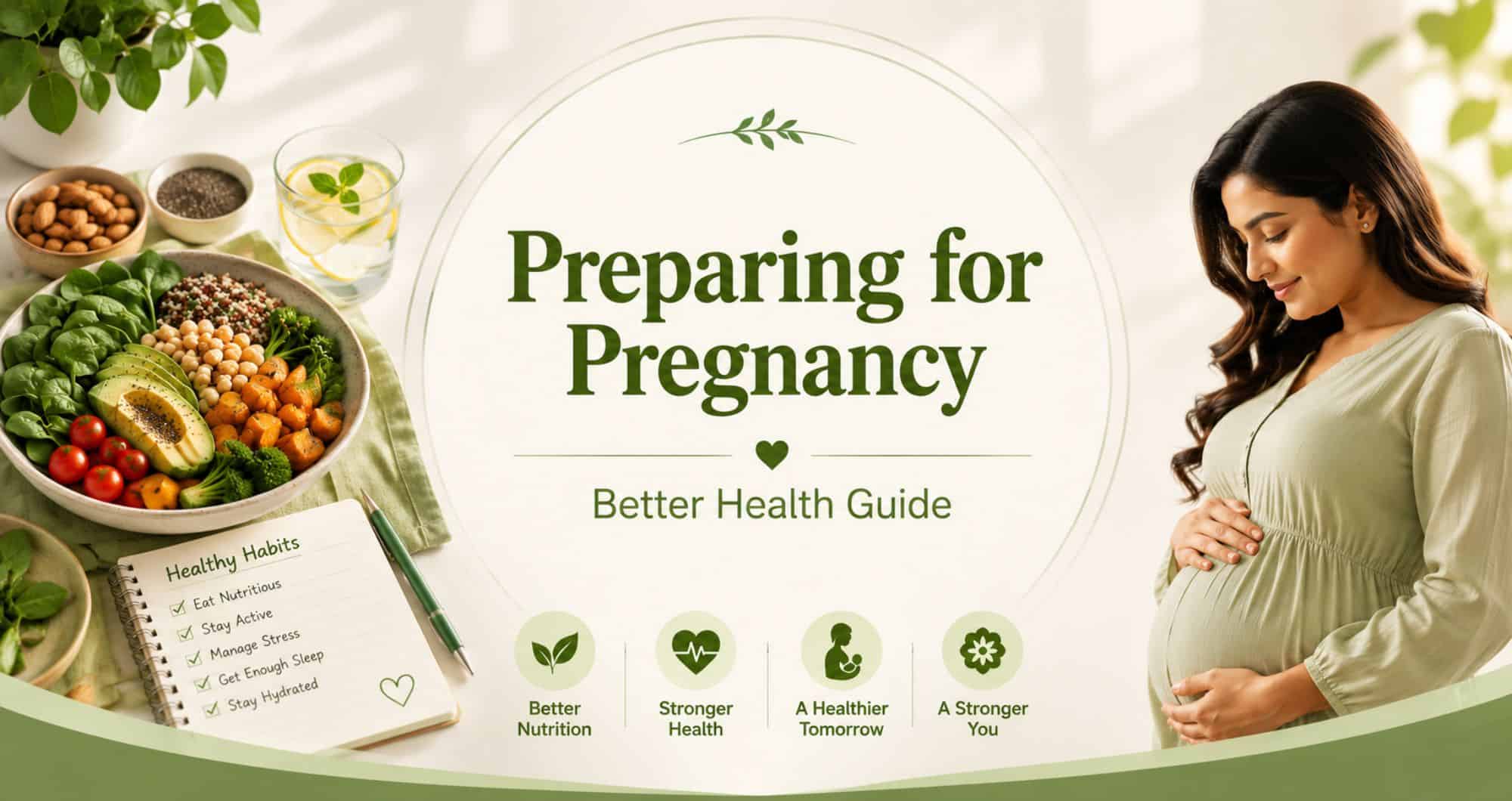
At Mitha Aahara, we often meet couples who begin thinking about nutrition only after seeing a positive pregnancy test. In reality, your body starts preparing for pregnancy much earlier. A balanced diet in the months before conception can help build nutrient stores, support reproductive health, and create a healthier foundation for pregnancy.
Preparing for Pregnancy? Start With Nutrition Months Before Conception
Planning for pregnancy often begins with tracking ovulation, taking folic acid, or scheduling a doctor’s appointment. Those are all useful steps. But there is something many couples miss.
Nutrition.
Your body needs time to build nutrient stores before pregnancy begins. You cannot make up for months or years of poor eating habits in just a few weeks. That’s why many doctors and dietitians suggest focusing on preconception nutrition at least three months before trying to conceive.
Think about it this way. Your future baby’s first home is your body. Giving it the nutrients it needs before conception creates a healthier environment from day one.
If you’re planning to start a family, this is the right time to look at your eating habits. Small changes today can make a real difference later.
Why Nutrition Before Pregnancy Matters
Many people assume nutrition becomes important only after a positive pregnancy test.
That isn’t really how the body works.
The early weeks of pregnancy are when major organs begin developing. In many cases, a woman may not even know she’s pregnant during this stage.
Your nutritional status before conception can influence:
- Egg quality
- Hormonal balance
- Ovulation
- Healthy sperm production
- Implantation
- Early fetal development
- Maternal health during pregnancy
Good nutrition doesn’t guarantee pregnancy. Fertility depends on many factors including age, medical history, hormones, genetics, and lifestyle.
Still, eating well helps your body prepare for the journey ahead.
Why Three Months Matter
The three months before conception are often called the preconception period.
During this time:
- Eggs complete important stages of development.
- Sperm mature over roughly 70 to 90 days.
- Nutrient stores like iron and folate can improve.
- Healthy habits become easier to continue during pregnancy.
If you’ve been waiting until pregnancy to “eat healthier,” it may be worth starting sooner.
Your body usually responds better to gradual, consistent changes than sudden restrictions.
Nutrients Your Body Needs Before Pregnancy
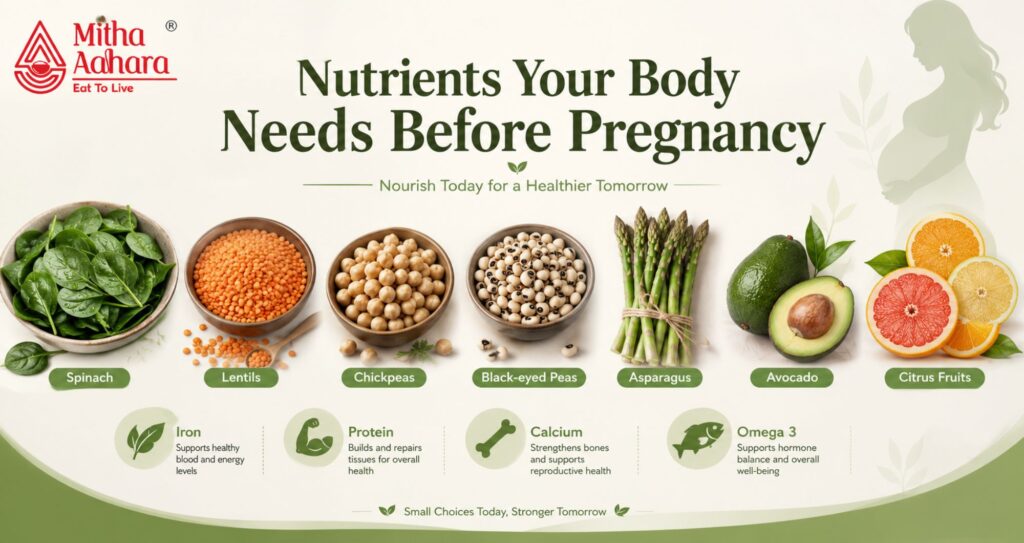
No single food improves fertility overnight.
What matters is your overall eating pattern.
Here are some nutrients that deserve attention.
Folate
Folate supports early brain and spinal cord development.
Good food sources include:
- Spinach
- Lentils
- Chickpeas
- Black-eyed peas
- Asparagus
- Avocado
- Citrus fruits
Many women are also advised to take a folic acid supplement before conception. Speak with your healthcare provider about the right dose for you.
Iron
Iron helps carry oxygen throughout the body.
Low iron stores can affect energy levels and may increase the risk of anemia during pregnancy.
Foods rich in iron include:
- Lean meat
- Fish
- Eggs
- Beans
- Soy products
- Garden cress seeds
- Pumpkin seeds
- Green leafy vegetables
Eating vitamin C-rich foods with plant-based iron sources may help improve absorption.
Protein
Protein supports hormones, muscles, and healthy tissue.
Try including protein in every meal.
Good choices include:
- Eggs
- Paneer
- Greek yogurt
- Fish
- Chicken
- Lentils
- Tofu
- Sprouts
- Milk
Many people focus only on calories. Protein often gets overlooked.
Omega-3 Fatty Acids
Omega-3 fats support normal brain and eye development during pregnancy.
Food sources include:
- Fatty fish
- Walnuts
- Flaxseeds
- Chia seeds
If you don’t eat fish, discuss alternatives with your healthcare provider.
Calcium and Vitamin D
These nutrients work together to support healthy bones.
Sources include:
- Milk
- Yogurt
- Paneer
- Fortified foods
- Sesame seeds
Vitamin D mainly comes from sunlight, though some foods contain small amounts.
Vitamin B12
Vitamin B12 supports healthy nerve function and blood cell production.
Vegetarians and vegans may need special attention because natural sources are mostly animal-based.
What Should Your Plate Look Like?
You don’t need expensive superfoods.
Simple home-cooked meals can provide most nutrients.
Aim for a balanced plate.
Include:
- Half the plate with vegetables
- One quarter with whole grains like brown rice or millets
- One quarter with protein
- A serving of healthy fat such as nuts or seeds
- Fruit during the day
Consistency usually matters more than perfection.
Foods to Limit While Preparing for Pregnancy
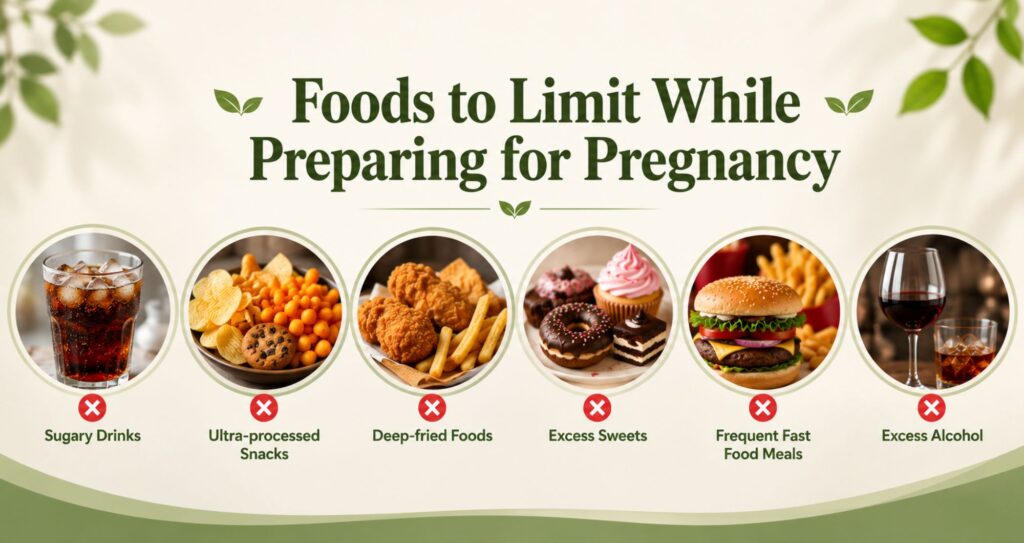
Instead of following strict food rules, focus on eating nourishing meals more often.
Try limiting:
- Sugary drinks
- Ultra-processed snacks
- Deep-fried foods
- Excess sweets
- Frequent fast food meals
- Excess alcohol
Having an occasional treat is part of normal eating for many people.
It’s your overall pattern that counts.
Don’t Forget Male Fertility
Pregnancy planning isn’t only about women.
Sperm health also depends on nutrition and lifestyle.
Men can benefit from:
- Protein-rich foods
- Fruits and vegetables
- Whole grains
- Nuts and seeds
- Zinc-rich foods
- Healthy body weight
- Good sleep
- Regular physical activity
Many couples focus entirely on female health.
In reality, both partners contribute to a healthy pregnancy.
Lifestyle Habits That Support Fertility
Food is only one part of the picture.
Other healthy habits include:
- Getting enough sleep
- Managing stress
- Staying physically active
- Drinking enough water
- Avoiding smoking
- Limiting alcohol
- Keeping medical conditions under control
- Attending regular health check-ups
These habits support overall health, whether you’re trying to conceive now or later.
Should You Follow Fertility Diets Online?
Social media is full of fertility meal plans.
Some recommend cutting entire food groups.
Others promise pregnancy within weeks.
The truth is much less dramatic.
There isn’t one diet that works for everyone.
Your nutrition needs depend on:
- Age
- Weight
- Medical history
- PCOS
- Thyroid disorders
- Diabetes
- Food preferences
- Cultural eating habits
That’s why personalized advice often works better than copying someone else’s diet chart.
When Should You Meet a Dietitian?
Many couples wait until they experience fertility challenges.
Meeting a registered dietitian before pregnancy may help identify nutritional gaps early.
A consultation may be useful if you have:
- PCOS
- Diabetes
- Thyroid disorders
- Obesity
- Underweight
- Food allergies
- Digestive conditions
- Vitamin deficiencies
- Recurrent pregnancy loss
- IVF treatment plans
A dietitian can review your eating habits, health history, blood reports if available, and daily routine before suggesting changes.
If you’re looking for the Best Dietitian in Bangalore, choose someone with experience in fertility nutrition, women’s health, and evidence-based dietary care. Personalized guidance is often more helpful than generic online advice because every couple’s needs are different.
Practical Nutrition Tips You Can Start Today
You don’t need to change everything overnight.
Start with a few simple habits.
- Eat breakfast every day.
- Add one extra serving of vegetables.
- Include protein with each meal.
- Drink enough water.
- Choose fruit instead of packaged desserts more often.
- Plan meals for busy weekdays.
- Cook at home whenever possible.
- Avoid skipping meals.
- Sleep for seven to nine hours most nights.
Small habits repeated daily usually bring better results than short-term diets.
Frequently Asked Questions
How many months before pregnancy should I improve my diet?
Most healthcare professionals recommend starting about three months before trying to conceive. This gives your body time to build nutrient stores and develop healthy habits.
Can nutrition improve fertility?
Nutrition supports overall reproductive health, hormone function, egg quality, and sperm health. Fertility also depends on age, medical conditions, genetics, and other lifestyle factors.
Which foods should I eat before pregnancy?
A balanced diet that includes vegetables, fruits, whole grains, lean protein, dairy or suitable alternatives, healthy fats, and iron-rich foods is a good place to start.
Is folic acid necessary before pregnancy?
Many women are advised to begin folic acid before conception because it supports early fetal development. Your healthcare provider can recommend the right dosage for your needs.
Should my partner also improve his diet?
Yes. Healthy eating supports sperm production and overall reproductive health. Pregnancy planning is something both partners can work on together.
Do I need a personalized fertility diet?
If you have PCOS, thyroid disease, diabetes, digestive disorders, nutrient deficiencies, or are preparing for IVF, personalized nutrition advice from a qualified dietitian may be helpful.
Final Thoughts
Preparing for pregnancy isn’t only about the day you see two lines on a pregnancy test.
It starts much earlier.
The meals you eat, the nutrients you build, and the habits you develop today may support your health in the months ahead.
You don’t need a perfect diet.
You need a balanced one that you can actually stick with.
That’s usually the approach that lasts.
If you’re planning a pregnancy and want a personalized nutrition plan, the dietitians at Mitha Aahara can help you identify nutrient gaps, build healthy eating habits, and create a preconception diet plan tailored to your health goals. Whether you’re trying to conceive naturally or preparing for fertility treatment, personalized nutrition guidance can make your journey more informed and sustainable.