Quick Answer
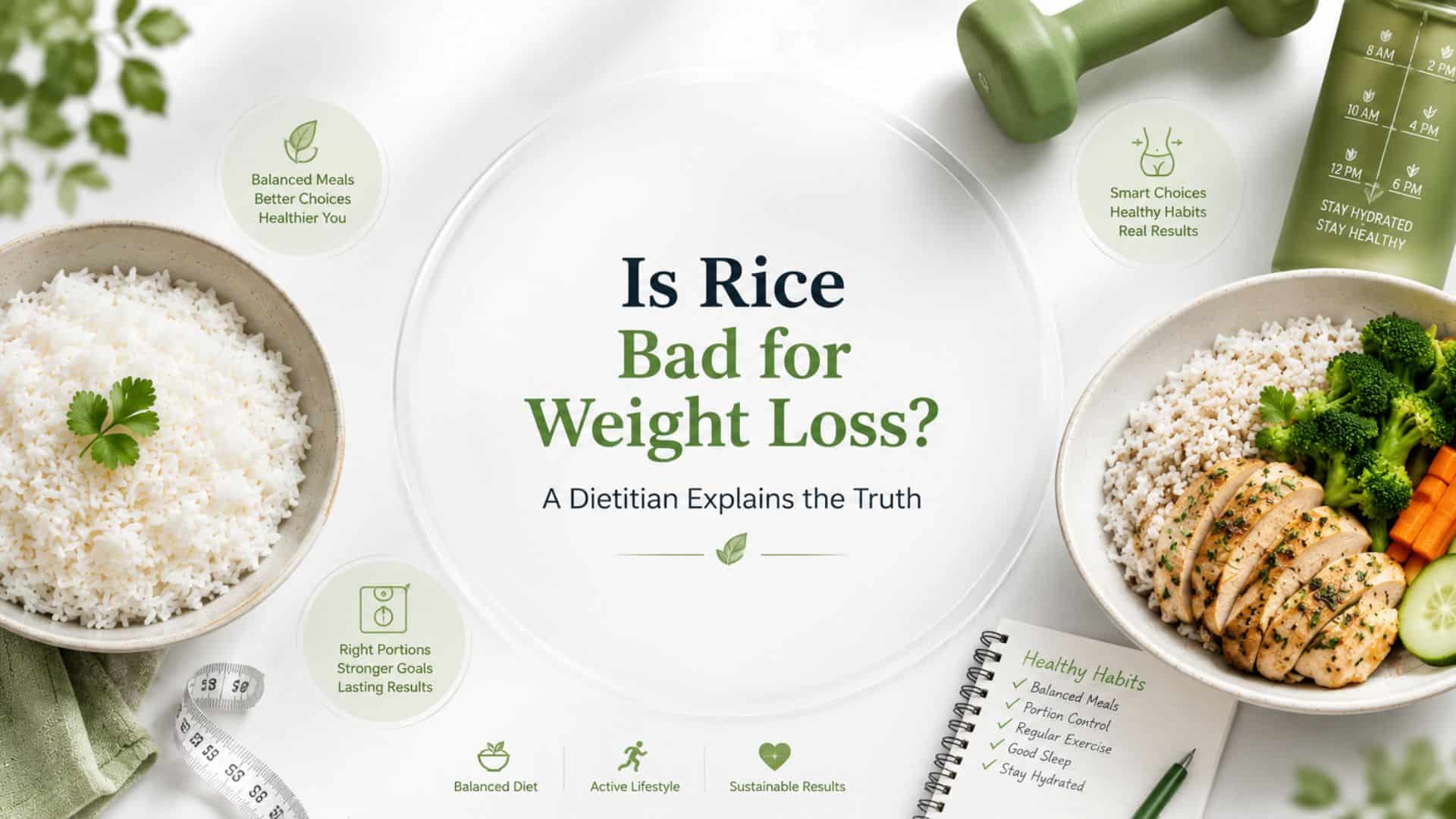
Rice is not bad for weight loss. You can include rice in a healthy weight-loss diet if you eat the right portion, balance it with protein and vegetables, and stay within your daily calorie needs. Instead of avoiding rice completely, focus on building balanced meals and healthy eating habits.
Is Rice Bad for Weight Loss? A Dietitian Explains the Truth
Many people stop eating rice as soon as they decide to lose weight. It’s one of the first foods to disappear from the plate. But is that really necessary?
The short answer is no.
Rice is not the reason people gain weight. Weight gain usually happens when you regularly eat more calories than your body needs. Your overall eating pattern, portion sizes, physical activity, sleep, and stress all play a role.
If you’ve ever wondered, “Can I still eat rice and lose weight?” you’re not alone. We hear this question almost every day from people who visit us for nutrition guidance. Most are surprised to learn that they don’t have to give up their favourite meals to see progress.
Let’s clear up the confusion and look at what really matters.
Why Does Rice Get a Bad Reputation?
Rice has been part of Indian meals for generations. Yet today, many people think it’s the biggest obstacle to losing weight.
Why?
One reason is that rice contains carbohydrates. Over the years, low-carb diets became popular, and many people started believing that all carbs lead to weight gain.
Another reason is social media.
You may have seen videos claiming that removing rice can help you lose weight quickly. Some people do lose weight after cutting out rice, but that doesn’t mean rice was the problem.
Often, they also:
- Eat fewer calories overall
- Reduce fried foods
- Cut back on sugary drinks
- Start exercising
These changes make a much bigger difference than avoiding rice alone.
Does Rice Actually Cause Weight Gain?
Not by itself.
No single food causes weight gain.
You gain weight when your body consistently receives more calories than it burns.
Think about it this way.
A bowl of plain cooked rice is very different from a large plate filled with rice, creamy curries, fried snacks, sugary drinks, and desserts.
The problem isn’t always the rice. It’s often the quantity and what comes with it.
I’ve also seen people replace rice with large amounts of biscuits, fried snacks, or packaged “diet foods.” They believe they’re eating healthier, but they often end up consuming even more calories.
That’s why looking at your entire meal is much more useful than blaming one ingredient.
Can You Eat Rice Every Day and Still Lose Weight?
Yes.
Many people across India eat rice daily and maintain a healthy weight.
The key is balance.
Your plate should include more than just rice.
A simple way to build a balanced meal is:
- One portion of cooked rice
- A bowl of dal or another protein source
- Plenty of cooked or raw vegetables
- A serving of curd if it suits your digestion
- Healthy fats in moderate amounts
This combination helps you stay full for longer and provides a better balance of nutrients.
White Rice vs Brown Rice for Weight Loss
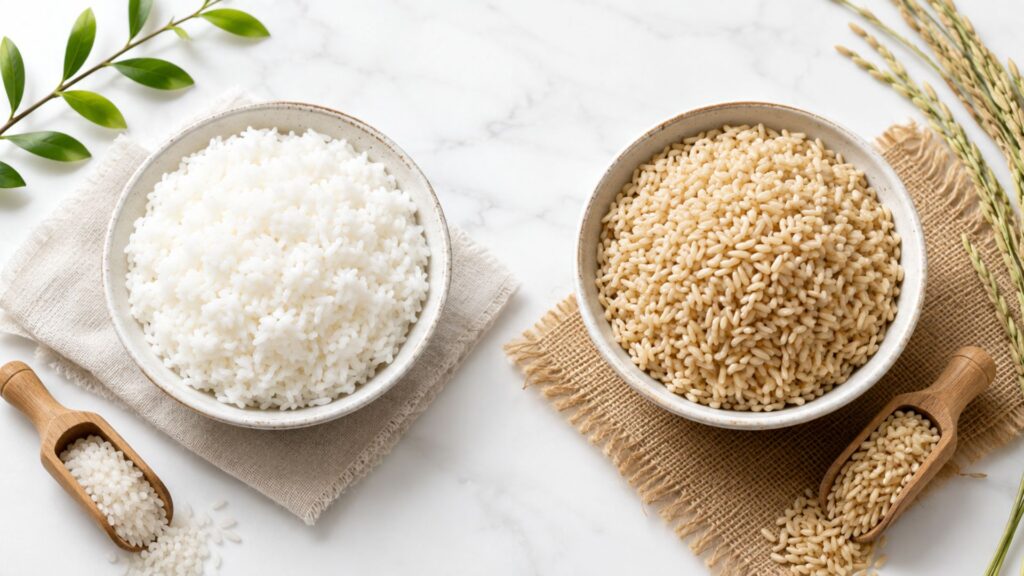
People often ask whether they should switch completely to brown rice.
The answer depends on your preferences, digestion, and lifestyle.
| White Rice | Brown Rice |
| Softer texture | Chewier texture |
| Easier to digest for many people | Higher in fiber |
| Cooks faster | Takes longer to cook |
| Works well after illness or digestive issues | Helps some people feel full for longer |
| Common in most Indian homes | Suitable if you enjoy its taste |
Brown rice contains more fiber because it keeps its outer layer.
That said, choosing brown rice doesn’t automatically lead to weight loss.
If you dislike it and stop eating it after a week, it probably isn’t the best choice for you.
A healthy eating plan should be practical enough to follow for months, not just a few days.
How Much Rice Should You Eat?
There isn’t one perfect portion for everyone.
The right amount depends on:
- Your age
- Physical activity
- Health conditions
- Hunger levels
- Weight-loss goals
As a general guide, many adults can include about ½ to 1 cup of cooked rice in a balanced meal.
If you’re very active, your needs may be different.
If you have diabetes, insulin resistance, or another medical condition, your dietitian may recommend a different portion based on your health goals.
This is why personalized nutrition works better than following random advice online.
Common Mistakes People Make With Rice
Rice is often blamed for problems with other causes.
Here are a few common mistakes.
Eating too much rice and too little protein
A plate filled mostly with rice may leave you hungry sooner.
Try adding:
- Dal
- Rajma
- Chole
- Paneer
- Fish
- Eggs
- Chicken
- Soy products
Protein helps improve fullness after meals.
Skipping vegetables
Vegetables add fiber and volume without adding many calories.
A colourful plate usually keeps you satisfied longer.
Eating too fast
Many people finish lunch in ten minutes.
When you slow down, your body has more time to recognize fullness.
Drinking sugary beverages
Even if you reduce rice, sweetened drinks can easily add extra calories.
Water, buttermilk, or unsweetened beverages are often better choices.
Is Rice Good for People With Diabetes or Insulin Resistance?
This is one of the most common questions we hear.
The answer isn’t a simple yes or no.
People with diabetes or insulin resistance do not always need to avoid rice completely. What matters more is the type of meal, portion size, and how rice fits into your overall eating pattern.
For example, eating a large plate of white rice by itself may cause your blood sugar to rise faster than eating a smaller portion of rice with dal, vegetables, and a source of protein.
A balanced meal slows digestion and helps you stay full for longer.
If you have diabetes, don’t copy someone else’s diet from social media. What works for one person may not work for another.
A registered dietitian can help you decide the right portion based on your blood sugar levels, medications, activity, and lifestyle.
How to Eat Rice Without Affecting Your Weight Loss Goals
You don’t need to fear rice. You just need to eat it wisely.
Here are a few practical tips that work for many people.
1. Watch Your Portion
Instead of filling half your plate with rice, start with a moderate serving.
You can always eat more if you’re genuinely hungry.
2. Add Protein to Every Meal
Protein helps you stay satisfied and supports muscle health during weight loss.
Good options include:
- Dal
- Sambar
- Paneer
- Eggs
- Fish
- Chicken
- Tofu
- Sprouts
- Greek yogurt or curd
3. Fill Half Your Plate With Vegetables
Vegetables add fiber, vitamins, and minerals while keeping meals filling.
You don’t need fancy salads.
Simple Indian vegetable dishes work just as well.
4. Avoid Mindless Refills
Many people unknowingly eat two or three extra servings because the rice bowl is sitting on the table.
Pause for a few minutes before taking another serving.
Ask yourself if you’re still hungry or just eating out of habit.
5. Stay Active
Even a 30-minute walk most days of the week supports healthy weight management.
Weight loss isn’t about one food. It’s about your daily habits.
Healthy Indian Rice Meal Ideas
If you enjoy rice, there’s no reason to stop eating your favourite meals.
Here are a few balanced combinations.
| Rice Meal | Why It Works |
| Rice + Dal + Vegetable Sabzi | Balanced carbs, protein, and fiber |
| Rice + Rajma + Salad | Keeps you fuller for longer |
| Rice + Sambar + Mixed Vegetables | Rich in fiber and plant protein |
| Rice + Grilled Fish + Stir-Fried Vegetables | Good source of protein and healthy fats |
| Rice + Chicken Curry + Cucumber Salad | Balanced and satisfying |
| Rice + Chole + Carrot and Cucumber Salad | Great vegetarian option |
These meals are simple, familiar, and don’t require expensive ingredients.
Rice Myths That Need to Go
Let’s clear up a few myths.
Myth 1: Rice Turns Into Fat
Rice doesn’t magically turn into body fat.
Eating more calories than your body needs over time can lead to weight gain.
Myth 2: Brown Rice Is Always Better
Brown rice has more fiber, but that doesn’t mean everyone has to eat it.
Some people prefer white rice because it’s easier to digest.
The best choice is the one you enjoy and can include in a balanced diet.
Myth 3: You Must Stop Eating Rice to Lose Belly Fat
There is no food that specifically causes belly fat.
You can’t target fat loss by removing one food.
Regular exercise, balanced meals, good sleep, and stress management all play a role.
Myth 4: Eating Rice at Night Causes Weight Gain
Your body doesn’t suddenly store rice as fat because you ate it for dinner.
What matters most is your total calorie intake throughout the day.
If rice fits within your daily needs, it can be part of dinner too.
Expert Tips From a Dietitian
After working with many people trying to lose weight, one thing becomes clear.
Strict diets rarely last.
The people who succeed are usually the ones who make small changes they can continue for months.
Some simple habits include:
- Eat slowly.
- Include protein in every meal.
- Don’t skip breakfast if you’re genuinely hungry.
- Drink enough water during the day.
- Get 7 to 9 hours of sleep.
- Stay physically active.
- Don’t label foods as “good” or “bad.”
Food should support your health, not become a source of guilt.
When Should You Speak to a Dietitian?
General advice can help, but every person is different.
You may benefit from professional guidance if you:
- Have diabetes or prediabetes
- Have PCOS
- Have thyroid disorders
- Have insulin resistance
- Have digestive concerns
- Feel confused by conflicting nutrition advice
- Have tried multiple diets without lasting success
A personalized nutrition plan can help you enjoy your favourite foods while working toward your health goals.
If you’re looking for the Best Dietitian in Bangalore, choose someone who focuses on sustainable eating habits rather than restrictive diets. A good dietitian will help you build a meal plan that suits your lifestyle, medical history, and food preferences instead of asking you to eliminate everyday foods like rice.
Frequently Asked Questions
Is rice bad for weight loss?
No. Rice is not bad for weight loss. You can include it in your diet if you eat appropriate portions and balance it with protein, vegetables, and healthy fats. Your overall calorie intake and lifestyle have a much bigger impact on weight loss than eating rice alone.
Can I eat rice every day while trying to lose weight?
Yes. Many people eat rice daily and still maintain a healthy weight. Focus on portion size, balanced meals, and regular physical activity rather than avoiding rice completely.
Which rice is best for weight loss?
There isn’t one perfect type of rice for everyone. Brown rice contains more fiber, while white rice is easier for many people to digest. The best choice depends on your preferences, health needs, and eating habits.
How much rice should I eat in one meal?
The ideal portion varies from person to person. For many adults, about half to one cup of cooked rice as part of a balanced meal is a reasonable starting point. Your requirements may differ based on activity level, age, and medical conditions.
Should I stop eating rice if I have diabetes?
Not always. Many people with diabetes can include rice in moderation. Pairing rice with protein, vegetables, and fiber can help create a more balanced meal. It’s best to discuss your individual needs with a registered dietitian.
Final Thoughts
Rice has been part of Indian kitchens for generations, and for good reason. It’s affordable, comforting, and works well with countless healthy meals.
The idea that you must stop eating rice to lose weight is one of the biggest nutrition myths.
Instead of fearing one food, focus on building balanced meals, staying active, sleeping well, and creating habits you can maintain for years.
Healthy eating shouldn’t make you feel deprived. It should help you enjoy food while taking care of your body.
If you’re unsure how much rice is right for you or have specific health conditions, getting personalized guidance from an experienced dietitian can make the journey much easier. At Mitha Aahara, our team believes in practical, evidence-based nutrition that fits real life. Rather than removing traditional foods from your plate, we help you create balanced meal plans that support your long-term health and weight goals.