Author: Sreemathy Venkatraman, Clinical Dietitian & Founder, Mitha Aahara
Medical Review: Reviewed by the Mitha Aahara Clinical Nutrition Team
Quick Answer
A GLP-1 diet plan focuses on eating balanced, nutrient-rich meals while using GLP-1 medications for weight management or type 2 diabetes. The goal is to support healthy weight loss, preserve muscle, reduce digestive discomfort, and build eating habits you can maintain long term. A personalized plan from a qualified dietitian can help you meet your nutrition needs while adjusting to changes in appetite.
Starting GLP-1 Medication? Your Diet Still Matters
Many people think GLP-1 medication does all the work. It’s easy to see why. Your appetite decreases, portions become smaller, and the number on the scale may start moving.
But here’s something many people discover after a few weeks.
They feel tired.
They skip meals because they aren’t hungry.
They don’t eat enough protein.
Some even notice hair fall or loss of muscle strength.
This is where a well-planned GLP-1 diet becomes important.
At Mitha Aahara, we often meet people who are excited about their weight-loss journey but aren’t sure what to eat. They know the medication helps control hunger, but they still have questions.
- Should I eat less?
- Do I need more protein?
- Can I still eat rice?
- What if I feel nauseous after meals?
These are real concerns, and you’re not alone if you’ve asked them too.
A good GLP-1 diet plan isn’t about eating as little as possible. It’s about making every meal count.
What Is a GLP-1 Diet Plan?
A GLP-1 diet plan is a nutrition plan created for people taking GLP-1 receptor agonist medications as part of weight management or diabetes care.
These medications work by helping you:
- Feel full sooner
- Stay full for longer
- Slow stomach emptying
- Reduce appetite
- Improve blood sugar control in many people
Because you naturally eat less, every bite becomes more important.
Your meals need to provide enough:
- Protein
- Fibre
- Vitamins
- Minerals
- Healthy fats
- Fluids
Without proper planning, you may unintentionally eat too little or miss out on key nutrients.
Why Nutrition Is Still Important on GLP-1 Medication
One question we hear quite often is:
“If the medicine reduces my appetite, why should I worry about diet?”
It’s a fair question.
Think of your body like a car. The medication may help control speed, but you still need good fuel to keep the engine running well.
A balanced diet supports:
- Healthy weight loss
- Muscle preservation
- Better energy levels
- Digestive health
- Blood sugar management
- Long-term eating habits
Many people lose weight quickly at first. The challenge comes later.
If most of the weight lost is muscle instead of fat, everyday tasks can start feeling harder. You may feel weaker than expected.
That’s why dietitians encourage focusing on nutrition from day one, not after problems appear.
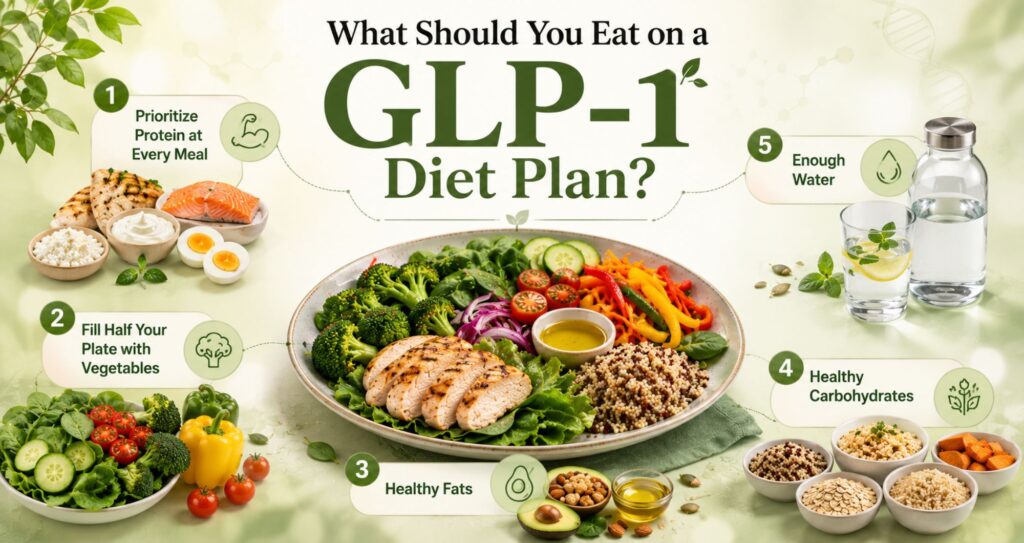
What Should You Eat on a GLP-1 Diet Plan?
There isn’t one perfect meal plan for everyone.
Your age, activity level, medical history, food preferences, and appetite all matter.
Still, most healthy GLP-1 meal plans include the same basic building blocks.
1. Prioritize Protein at Every Meal
Protein is one of the biggest priorities while taking GLP-1 medication.
Since you’re eating smaller portions, protein helps you get more nutrition from each meal.
It may also help preserve muscle while you’re losing weight.
Good protein choices include:
- Eggs
- Paneer
- Greek yogurt
- Tofu
- Lentils
- Chickpeas
- Fish
- Chicken
- Lean meat
- Soy products
A simple breakfast could be vegetable oats with paneer instead of plain toast.
That small change adds much more nutrition without making the meal complicated.
2. Fill Half Your Plate with Vegetables
Vegetables add fibre without adding many calories.
They also help support digestion, which can be helpful because some people experience constipation while taking GLP-1 medication.
Choose a variety of colours.
For example:
- Spinach
- Broccoli
- Bottle gourd
- Carrots
- Beans
- Cauliflower
- Bell peppers
- Cucumber
- Tomatoes
Fresh, cooked, or lightly steamed vegetables all work well.
3. Don’t Be Afraid of Healthy Carbohydrates
Many people stop eating rice or chapati completely.
That’s one of the most common mistakes.
Your body still needs carbohydrates for energy.
The key is choosing appropriate portions and pairing them with protein and vegetables.
Good choices include:
- Brown rice
- Millets
- Whole wheat roti
- Oats
- Quinoa
- Sweet potatoes
A balanced lunch is often more satisfying than removing carbohydrates altogether.
4. Include Healthy Fats
Healthy fats support overall nutrition and help meals feel satisfying.
You don’t need large amounts.
Small portions are usually enough.
Examples include:
- Almonds
- Walnuts
- Flaxseeds
- Chia seeds
- Olive oil
- Groundnut oil
- Avocado, where available
5. Drink Enough Water
Because appetite decreases, many people also forget to drink water.
Even mild dehydration can leave you feeling tired or give you headaches.
Keep a water bottle nearby.
Some people find it easier to take small sips throughout the day instead of drinking large amounts at once.
If plain water feels boring, try:
- Lemon water without added sugar
- Coconut water when appropriate
- Buttermilk
- Herbal tea
Foods That May Be Better in Smaller Amounts
No food needs to be completely banned unless your healthcare team advises it.
Still, some foods may worsen digestive discomfort or make it harder to meet your nutrition goals.
These include:
- Fried foods
- Sugary drinks
- Large desserts
- Ultra-processed snacks
- Heavy, creamy meals
- Alcohol, depending on your health condition and medical advice
Many people notice that rich, greasy meals feel heavier once they begin GLP-1 therapy.
Listening to your body is often the best guide.
Common Nutrition Mistakes People Make
Over the years, dietitians have noticed similar patterns among people beginning GLP-1 treatment.
Here are some of the most common mistakes.
Skipping meals
You may not feel hungry.
That doesn’t always mean your body has everything it needs.
Eating very little protein
A small bowl of fruit isn’t enough for every meal.
Protein deserves a place on your plate throughout the day.
Drinking too little water
Reduced appetite sometimes means reduced thirst too.
Depending on supplements instead of food
Supplements may help in some cases, but they shouldn’t replace balanced meals unless advised by your healthcare provider.
Trying crash diets
Eating as little as possible rarely supports healthy, lasting weight management.
Slow, consistent habits usually work much better.
A Sample 1-Day Indian GLP-1 Diet Plan
This sample meal plan is meant to give you ideas. It isn’t a replacement for a personalized nutrition plan because your calorie and protein needs depend on your age, activity level, medical history, and the medication you’re taking.
| Meal | Sample Ideas |
| Breakfast | Vegetable oats with paneer or two boiled eggs, plus unsweetened tea or coffee |
| Mid-Morning | One fruit with a handful of almonds or roasted chana |
| Lunch | One or two whole wheat rotis or brown rice, dal, mixed vegetable sabzi, cucumber salad, and curd |
| Evening Snack | Greek yogurt or buttermilk with roasted seeds |
| Dinner | Grilled fish, chicken, tofu, or paneer with sautéed vegetables and a small portion of millet or quinoa |
| Before Bed (if needed) | A glass of milk or a small bowl of unsweetened yogurt |
The goal isn’t to eat perfectly every day.
It’s to build meals that keep you satisfied and nourished without feeling deprived.
What If You Feel Nauseous on GLP-1 Medication?
Nausea is one of the most common concerns, especially during the first few weeks.
The good news is that it often improves as your body adjusts.
Here are a few practical tips that many people find helpful.
- Eat smaller meals instead of large ones.
- Eat slowly and chew your food well.
- Avoid very greasy or spicy meals if they trigger discomfort.
- Drink water between meals rather than with large meals.
- Include simple foods like curd, khichdi, soups, or toast if your stomach feels unsettled.
If nausea is severe, doesn’t improve, or you struggle to eat enough, speak with your healthcare provider or dietitian.
Why Protein and Strength Training Matter
Weight loss is exciting.
Losing muscle isn’t.
When people eat much less without enough protein or physical activity, they may lose muscle along with body fat.
That can affect:
- Strength
- Energy
- Balance
- Long-term metabolism
Simple strength exercises two or three times a week can help preserve muscle.
You don’t need to spend hours in the gym.
Bodyweight exercises, resistance bands, or light weights are enough for many people. Your exercise plan should always match your health condition and fitness level.
Can You Still Enjoy Your Favourite Foods?
Yes.
One meal won’t ruin your progress.
Many people think they have to give up rice, sweets, or family dinners forever.
That’s rarely realistic.
Healthy eating should fit into your life, not take it over.
At Mitha Aahara, we encourage balance instead of strict food rules. A personalized plan makes room for cultural foods, family meals, festivals, and personal preferences while helping you stay on track.
When Should You Work with a Dietitian?
General nutrition advice can be helpful.
Personalized advice is even better.
You may benefit from working with a dietitian if you:
- Have diabetes or prediabetes
- Have PCOS
- Have thyroid concerns
- Follow a vegetarian or vegan diet
- Have kidney disease or digestive disorders
- Are unsure how much protein you need
- Have stopped losing weight
- Experience ongoing nausea or poor appetite
A personalized nutrition plan looks at your medical history, eating habits, food preferences, lifestyle, and long-term goals.
Expert Insight from Sreemathy Venkatraman
“GLP-1 medication can support weight management, but lasting results come from building healthy eating habits that fit your lifestyle. I encourage my clients to focus on balanced meals, adequate protein, and sustainable changes rather than chasing quick fixes. Nutrition isn’t about eating less. It’s about eating well.”
— Sreemathy Venkatraman
Clinical Dietitian & Founder, Mitha Aahara
Key Takeaways
A GLP-1 diet plan is about much more than reducing calories.
The right nutrition can help you:
- Meet your protein needs
- Preserve muscle during weight loss
- Support digestive health
- Improve energy levels
- Build healthy habits that last
Small, consistent changes often lead to better long-term results than strict diets.
If you’re taking GLP-1 medication and feel unsure about what to eat, a personalized plan from a qualified dietitian can help you feel more confident and better supported throughout your journey.
Frequently Asked Questions
What is a GLP-1 diet plan?
A GLP-1 diet plan is a balanced eating plan designed for people taking GLP-1 medications. It focuses on protein, fibre, hydration, and nutrient-rich meals to support healthy weight management and overall nutrition.
What foods should I eat while taking GLP-1 medication?
Choose foods rich in protein, vegetables, whole grains, fruits, healthy fats, and plenty of fluids. These foods help you meet your nutrition needs even when your appetite is lower.
Can I eat rice on a GLP-1 diet?
Yes. Rice can be part of a healthy GLP-1 diet when eaten in suitable portions and paired with protein and vegetables. There is no need to avoid it completely unless advised by your healthcare provider.
How much protein do I need on a GLP-1 diet?
Protein needs vary depending on your age, body weight, activity level, and medical conditions. A registered dietitian can help you calculate the right amount for your individual needs.
Why do I feel nauseous after starting GLP-1 medication?
Nausea is a common side effect, especially when beginning treatment or increasing the dose. Eating smaller meals, avoiding greasy foods, and staying hydrated often helps. Speak with your healthcare provider if symptoms continue.
Can I follow a vegetarian GLP-1 diet?
Yes. Paneer, tofu, soy products, lentils, beans, chickpeas, dairy, and nuts can all provide protein as part of a vegetarian GLP-1 meal plan.
Do I need a dietitian while taking GLP-1 medication?
While not everyone needs one, many people find that a dietitian helps them create a practical meal plan, meet protein needs, manage side effects, and build healthy habits that are easier to maintain.
Is this sample meal plan suitable for everyone?
No. It is intended for educational purposes only. Your nutrition needs depend on your health condition, medications, food preferences, and personal goals. A personalized consultation is the best way to receive advice tailored to you.
References
- American Diabetes Association (ADA)
- Academy of Nutrition and Dietetics
- National Institute of Diabetes and Digestive and Kidney Diseases (NIDDK)
- Obesity Medicine Association
Medical Disclaimer
This article is for educational purposes only and should not replace medical advice, diagnosis, or treatment. Always consult your doctor or a qualified dietitian before making changes to your diet, medication, or lifestyle, especially if you have diabetes, kidney disease, or other medical conditions.