Iron deficiency is one of those health issues that often hides in plain sight.
Many women spend months, sometimes years, feeling tired, struggling with concentration, noticing increased hair fall, or dealing with unexplained weakness. They blame work stress, poor sleep, age, hormones, or a busy schedule. The real cause often goes unnoticed.
In fact, iron deficiency in women is one of the most common nutritional deficiencies worldwide, and women are particularly vulnerable due to menstruation, pregnancy, breastfeeding, and increased nutritional demands throughout life.
The good news is that your body usually sends warning signals before the problem becomes severe. The challenge is recognizing them early.
If you’ve been feeling “off” lately and can’t quite figure out why, these signs deserve your attention.
What Is Iron Deficiency?
Iron deficiency occurs when your body does not have enough iron to produce adequate amounts of hemoglobin. Hemoglobin is a protein found in red blood cells that carries oxygen from your lungs to every tissue and organ in your body.
Without sufficient iron, your body struggles to transport oxygen efficiently. As a result, even simple daily activities can start feeling exhausting.
Definition:
Iron deficiency is a condition in which the body’s iron stores become depleted, reducing its ability to produce healthy red blood cells and transport oxygen effectively.
Why Women Are More Prone to Iron Deficiency
Women face several unique risk factors:
• Monthly menstrual blood loss
• Pregnancy and childbirth
• Breastfeeding
• Heavy menstrual periods
• Restrictive dieting
• Vegetarian or vegan diets without proper planning
• Conditions affecting nutrient absorption
• Increased nutritional requirements during adolescence
According to the World Health Organization, anemia affects a significant percentage of women globally, with iron deficiency being the leading cause.
10 Signs of Iron Deficiency in Women
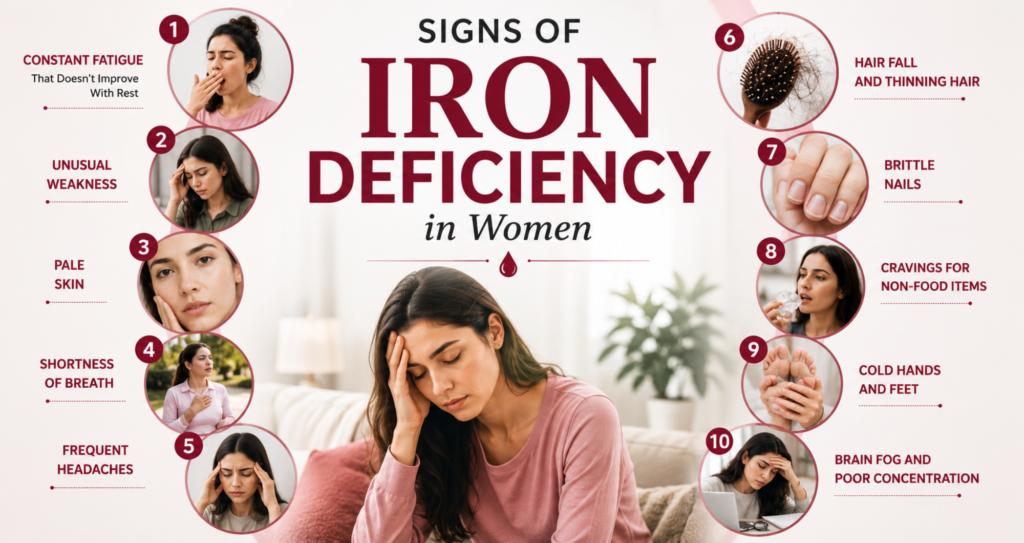
- Constant Fatigue That Doesn’t Improve With Rest
Feeling tired after a long day is normal.
Feeling exhausted despite sleeping well is different.
One of the earliest and most common signs of iron deficiency is persistent fatigue. Since your body receives less oxygen, your muscles and organs must work harder to perform routine tasks.
Many women describe it as:
• Waking up tired
• Feeling drained by the afternoon
• Needing excessive caffeine
• Struggling to complete normal activities
A woman in her early thirties may assume work stress is causing her fatigue. Blood tests often reveal low iron levels as the underlying issue.
- Unusual Weakness
Weakness often accompanies fatigue, but it feels slightly different.
You may notice:
• Difficulty carrying groceries
• Reduced exercise performance
• Feeling physically drained after simple tasks
• Trouble climbing stairs
When muscles receive less oxygen, physical strength naturally declines.
Many women notice their workouts becoming harder long before they suspect an iron deficiency.
- Pale Skin
Healthy red blood cells give skin its natural colour.
When iron levels drop, the skin may appear noticeably paler than usual.
You may observe paleness in:
• Face
• Lips
• Gums
• Eyelids
• Nail beds
This change can be subtle. Friends or family members sometimes notice it before the person affected does.
- Shortness of Breath
Do you find yourself becoming breathless after walking short distances?
Iron deficiency reduces oxygen delivery throughout the body. To compensate, your heart and lungs work harder.
This may result in:
• Breathlessness while walking
• Difficulty exercising
• Increased breathing during simple activities
• Reduced stamina
Shortness of breath should never be ignored, especially if it develops suddenly or worsens over time.
- Frequent Headaches
The brain is highly sensitive to oxygen levels.
When iron stores are low, reduced oxygen delivery may trigger headaches in some individuals.
Common patterns include:
• Frequent headaches
• Dizziness
• Pressure-like sensations
• Difficulty concentrating during headaches
Although headaches can have many causes, recurring headaches alongside fatigue deserve medical evaluation.
- Hair Fall and Thinning Hair
Hair loss can be frustrating and emotionally distressing.
Iron plays an important role in supporting healthy hair growth. When levels become low, the body prioritizes vital organs over hair production.
Signs may include:
• Increased shedding during washing
• More hair on pillows
• Thinning around the scalp
• Reduced hair density
Hair loss has many possible causes, but iron deficiency remains one of the most common nutritional contributors in women.
- Brittle Nails
Your nails often reflect your nutritional status.
Iron deficiency may lead to:
• Weak nails
• Frequent breakage
• Cracks
• Thin nail structure
In advanced cases, some women develop spoon-shaped nails, a condition known as koilonychia.
This sign is less common but strongly associated with long-standing iron deficiency.
- Cravings for Non-Food Items
This symptom surprises many people.
Some women develop unusual cravings for substances that have no nutritional value.
Examples include:
• Ice
• Clay
• Chalk
• Dirt
• Paper
This condition is called pica.
Researchers do not fully understand why it occurs, but it is frequently linked to iron deficiency.
Interestingly, craving and chewing ice are among the most commonly reported signs.
- Cold Hands and Feet
If your hands and feet constantly feel cold, low iron could be a contributing factor.
Reduced oxygen delivery affects circulation and temperature regulation.
Women often report:
• Cold fingers
• Cold toes
• Increased sensitivity to winter weather
• Difficulty staying warm
While thyroid disorders can also cause similar symptoms, iron deficiency should be considered in the evaluation.
- Brain Fog and Poor Concentration
Many women describe this symptom as feeling mentally sluggish.
You may experience:
• Difficulty focusing
• Poor memory
• Reduced productivity
• Trouble following conversations
• Mental fatigue
The brain relies heavily on oxygen.
When iron levels fall, cognitive performance may suffer, even before anemia becomes severe.
Common Causes of Iron Deficiency in Women
Understanding the cause is just as important as treating the deficiency.
Heavy Menstrual Bleeding
Women with heavy periods lose more blood and therefore more iron every month.
Pregnancy
Iron requirements increase significantly during pregnancy to support both mother and baby.
Inadequate Dietary Intake
Women following restrictive diets may not consume enough iron-rich foods.
Digestive Conditions
Conditions such as celiac disease, inflammatory bowel disease, and chronic digestive disorders may reduce iron absorption.
Frequent Blood Donation
Regular blood donation can contribute to depleted iron stores in some women.
Iron-Rich Foods Women Should Include
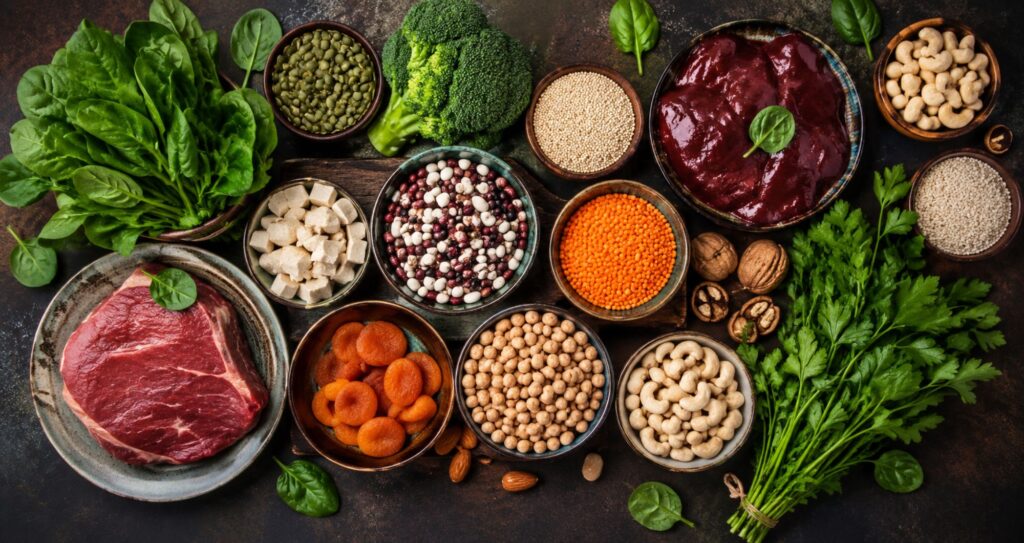
Improving dietary intake is an important step.
Animal-Based Sources
• Lean red meat
• Chicken liver
• Fish
• Eggs
Plant-Based Sources
• Lentils
• Chickpeas
• Beans
• Spinach
• Amaranth leaves
• Pumpkin seeds
• Sesame seeds
• Tofu
To improve absorption, combine iron-rich foods with vitamin C sources such as:
• Oranges
• Amla
• Guava
• Lemon
• Bell peppers
For example, squeezing lemon over lentils can improve iron absorption significantly.
Common Mistakes Women Make
Ignoring Symptoms for Too Long
Many women normalize fatigue and assume it is simply part of a busy lifestyle.
Self-Diagnosing Without Testing
Symptoms alone cannot confirm iron deficiency. Blood tests are necessary.
Taking Supplements Without Guidance
Excess iron can also be harmful. Supplementation should be based on professional recommendations.
Relying Only on Spinach
Spinach contains iron, but absorption is limited. A balanced approach works better.
Drinking Tea or Coffee Immediately After Meals
Tea and coffee contain compounds that can reduce iron absorption when consumed with meals.
When Should You Get Tested?
Consider speaking with a healthcare professional if you experience:
• Persistent fatigue
• Heavy menstrual periods
• Ongoing hair loss
• Breathlessness
• Frequent headaches
• Vegetarian or vegan dietary patterns
• Previous history of anemia
Common tests may include:
• Complete Blood Count (CBC)
• Serum Ferritin
• Serum Iron
• Total Iron Binding Capacity (TIBC)
Many healthcare professionals consider ferritin one of the most useful indicators of iron stores.
Practical Steps to Prevent Iron Deficiency
- Include iron-rich foods daily.
- Pair iron foods with vitamin C sources.
- Address heavy menstrual bleeding.
- Avoid unnecessary restrictive diets.
- Schedule routine health checkups.
- Monitor iron status during pregnancy.
- Follow supplement advice carefully.
Frequently Asked Questions
Q1. What is the first sign of iron deficiency in women?
Fatigue is often the earliest and most commonly reported symptom. Many women notice persistent tiredness long before anemia is diagnosed.
Q2. Can iron deficiency cause hair loss?
Yes. Low iron levels can contribute to increased hair shedding and reduced hair growth. However, hair loss can have multiple causes, so proper evaluation is important.
Q3. How long does it take to correct an iron deficiency?
This depends on the severity of the deficiency. Many women notice symptom improvement within weeks, but restoring iron stores often takes several months.
Q4. Can vegetarians get enough iron from food?
Yes. Plant-based diets can provide adequate iron when carefully planned with legumes, seeds, leafy greens, and vitamin C-rich foods.
Q5. Is iron deficiency the same as anemia?
No. Iron deficiency occurs first. If it progresses and affects red blood cell production, iron deficiency anemia develops.
Final Takeaway
Iron deficiency rarely appears overnight. It develops gradually, and your body usually provides warning signs along the way. Persistent fatigue, hair loss, headaches, breathlessness, brain fog, and cold hands and feet should not be dismissed as normal.
The earlier iron deficiency is identified, the easier it is to correct. Paying attention to these signals, improving dietary habits, and seeking timely medical evaluation can help prevent more serious complications later.
If you have been experiencing several of these symptoms, consider discussing iron testing with a qualified healthcare professional. Sometimes the answer to months of unexplained fatigue is much simpler than you think.
For women seeking personalized nutrition support and practical dietary guidance, Mitha Aahara provides evidence-based nutrition strategies that support long-term health and wellness. If you’re looking for the Best Nutritionist in Bangalore, working with a qualified professional can help identify nutrient deficiencies early and create a nutrition plan tailored to your individual needs.