So, what is the best diet for PCOS weight loss?
The answer is not one strict diet. Current PCOS guidance does not support one particular diet composition as being better than all others. A healthy, sustainable eating pattern that fits your food preferences, lifestyle and health goals is more useful. For weight management, your overall food intake, activity, sleep, routine and consistency all matter.
For an Indian diet, this can be much simpler than it sounds.
You don’t necessarily need to give up rice or chapati. You need to build a more balanced plate.
Quick Answer
The best diet for PCOS weight loss is a balanced eating pattern that includes protein, fibre-rich carbohydrates, vegetables, healthy fats and minimally processed foods. Foods such as eggs, dal, beans, vegetables, whole grains, nuts, seeds, curd and fish can make meals more filling and nutritious.
The right plan should also match your preferences, culture, daily routine and health needs rather than forcing you into an overly restrictive diet.
Why Can Weight Loss Feel Difficult With PCOS?
PCOS is more than an issue related to periods or fertility. It can also involve metabolic health, body composition and weight management.
Some women find that managing weight takes more planning and consistency. This can become frustrating, especially when you feel that you are eating “healthy” but aren’t seeing the results you expected.
A common example is breakfast.
You may have tea and two biscuits because they seem light. By 11 a.m., you are hungry again. Then lunch becomes larger, evening cravings increase, and dinner may turn into a second big meal.
The problem isn’t that you lack willpower.
Your meals may simply not be keeping you satisfied.
This is where protein, fibre and balanced portions can help.
The international PCOS guideline recommends healthy lifestyle habits for women with PCOS and supports sustainable eating patterns tailored to individual preferences and goals. It also points out that health benefits can occur even without weight loss.
12 Essential Foods for PCOS Weight Loss
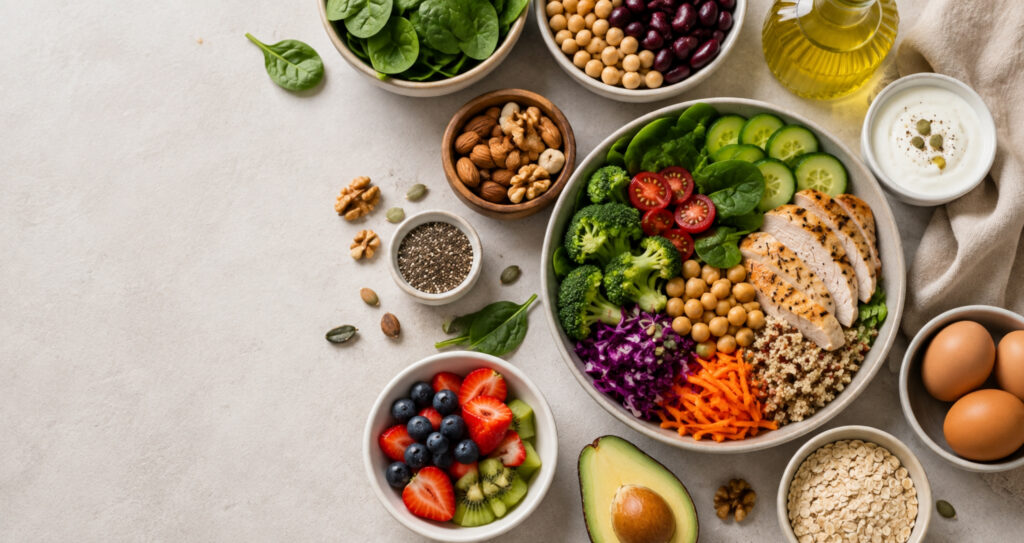
There isn’t a magical PCOS food. Think of these foods as useful building blocks for a balanced diet.
1. Eggs
Eggs are an easy source of protein and can make breakfast more satisfying.
Try:
- Vegetable omelette
- Boiled eggs with whole-grain toast
- Egg bhurji with vegetables
- Egg and paneer breakfast
If you usually start the day with only tea and biscuits, adding a protein-rich breakfast can be a simple change.
2. Dal
Dal is one of the easiest foods to include in an Indian PCOS-friendly diet.
Moong dal, masoor dal, toor dal, and other pulses provide protein and fibre.
Instead of eating a large serving of rice with a small amount of dal, try making dal a proper part of your meal.
A simple plate could include:
- Dal
- Vegetable sabzi
- Salad
- A moderate portion of rice or roti
3. Chickpeas and Other Beans
Chana, rajma, black chana and other beans can add both protein and fibre to your meals.
They work well in:
- Chana salad
- Rajma with brown or regular rice
- Chole with roti
- Sprouted pulse salads
You don’t need to avoid carbohydrates completely. The type, portion and overall meal combination matter.
The PCOS guideline notes that there is not enough evidence to recommend one specific macronutrient composition over another.
4. Green Vegetables
Spinach, methi, beans, broccoli, cabbage and other vegetables are useful for increasing fibre and adding variety to meals.
Try to make vegetables a visible part of lunch and dinner rather than treating them as a tiny side dish.
A practical rule?
Fill a good portion of your plate with vegetables, then add your protein and carbohydrate sources.
5. Curd and Unsweetened Yogurt
Plain curd can be a convenient addition to an Indian meal.
You can have it with:
- Lunch
- Vegetable pulao
- Roti and sabzi
- A bowl of fruit and nuts
- Homemade raita
Choose plain, unsweetened curd instead of flavoured varieties that may contain added sugar.
If dairy doesn’t suit you, you can discuss suitable alternatives with a qualified healthcare professional or dietitian.
6. Fish
For people who eat non-vegetarian food, fish can be a useful protein source.
Fatty fish such as salmon, sardines and mackerel also provide omega-3 fatty acids.
In an Indian kitchen, simple preparations are usually better than deep-fried fish.
Try:
- Grilled fish
- Fish curry with less oil
- Steamed fish
- Fish with vegetables and a small serving of rice
The goal isn’t to make every meal “perfect”. You want meals that you can actually continue eating.
7. Paneer and Tofu
Vegetarian?
Paneer and tofu can make it easier to include protein in your meals.
You can add them to:
- Vegetable stir-fries
- Paneer bhurji
- Tofu curry
- Salads
- Homemade wraps
One common mistake is having a meal that looks healthy but contains very little protein. A large bowl of vegetables alone may not keep you full for very long.
Your meal needs balance.
8. Nuts and Seeds
Almonds, walnuts, pumpkin seeds, chia seeds and flaxseeds can be useful additions to a balanced diet.
They provide healthy fats, fibre and other nutrients.
But remember that nuts and seeds are energy-dense foods. More isn’t always better.
A small portion can be enough.
Instead of eating directly from a large packet, put your portion in a small bowl. It sounds like a tiny habit, but it can make mindful eating easier.
9. Oats and Other Whole Grains
Oats can be a convenient breakfast option, especially when combined with protein and other nutritious foods.
Try:
- Oats with curd and seeds
- Vegetable oats
- Oats chilla
- Overnight oats with nuts
Other whole-grain choices can also fit into a PCOS-friendly eating pattern.
You don’t have to replace every grain with a “special” PCOS food.
The bigger picture matters more.
10. Fruits
Fruit does not need to be removed from your diet just because you have PCOS.
Apples, guava, oranges, berries, pears, papaya and other whole fruits can fit into a balanced eating pattern.
Whole fruit is generally more filling than fruit juice because you also get fibre.
A practical approach is to pair fruit with a source of protein or healthy fat when it suits your meal.
For example:
- Apple + a few nuts
- Guava + curd
- Fruit + seeds
- Papaya + plain yogurt
You don’t need to fear every naturally occurring carbohydrate.
11. Flaxseeds and Chia Seeds
These tiny seeds are easy to overlook, but they can add fibre and healthy fats to your meals.
Try adding a small amount to:
- Curd
- Oats
- Smoothies
- Salads
- Homemade chilla batter
Ground flaxseed is often easier to include in meals than whole seeds.
One thing to remember is that adding seeds to an otherwise unbalanced diet won’t suddenly make it a PCOS diet.
They are one small part of the overall meal.
12. Whole Vegetables and Salad
Cucumber, carrot, tomato, capsicum, cabbage and other vegetables can add volume and fibre to meals.
A simple Indian lunch could look like:
| Food group | Example |
| Protein | Dal, paneer, eggs or fish |
| Vegetables | Sabzi + salad |
| Carbohydrate | Roti or rice |
| Healthy fat | Nuts, seeds or a moderate amount of cooking oil |
| Optional side | Plain curd |
This kind of plate is usually easier to maintain than a diet built around long lists of forbidden foods.
What Should a PCOS Weight-Loss Plate Look Like?
You don’t need to measure every ingredient forever.
Start by looking at your plate.
A useful approach is to include:
- Plenty of vegetables
- A clear protein source
- A sensible portion of carbohydrate
- A small amount of healthy fat
For example, instead of having three rotis with a little sabzi, you could try two rotis with a larger serving of vegetables and dal.
Or, if you prefer rice, keep rice on your plate and add dal, vegetables, salad and curd.
This is especially useful for Indian families because food is often shared at home. You shouldn’t need to cook a completely separate meal just because you have PCOS.
Do You Need to Stop Eating Rice for PCOS?
No.
Rice can be part of a healthy PCOS diet.
What matters is how much you eat and what you eat with it.
A bowl of rice with dal, vegetables and curd is very different from eating a large plate of plain white rice with very little protein or vegetables.
If you love rice, removing it completely may make your diet harder to follow.
And what happens when a diet becomes too restrictive?
You may follow it for two weeks, feel deprived, and then return to your usual eating habits.
A sustainable plan usually wins over a perfect plan that you cannot maintain.
What Foods Should You Limit for PCOS Weight Loss?
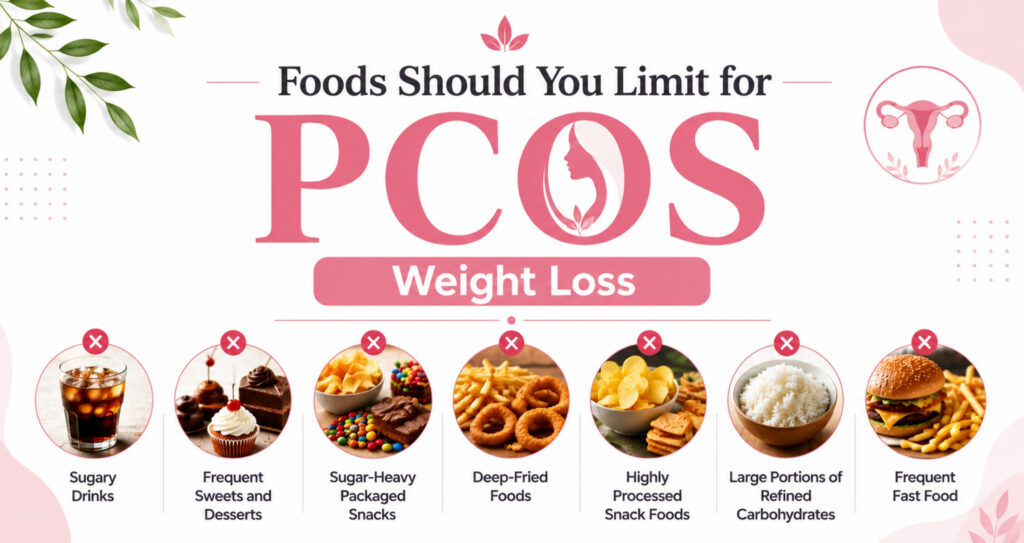
There is no universal list of foods that every woman with PCOS must completely avoid.
Still, it makes sense to limit foods that are high in added sugar, heavily processed or easy to overeat.
These may include:
- Sugary drinks
- Frequent sweets and desserts
- Sugar-heavy packaged snacks
- Deep-fried foods
- Highly processed snack foods
- Large portions of refined carbohydrates
- Frequent fast food
This doesn’t mean you can never have dessert.
If you enjoy a piece of cake at a family celebration, eat it and move on.
One meal doesn’t decide your health.
Your regular eating pattern matters much more.
Common PCOS Diet Mistakes to Avoid
Sometimes the problem isn’t a lack of effort. It’s the approach.
1. Eating too little
Severely restricting food can leave you hungry, tired and more likely to overeat later.
2. Cutting all carbohydrates
Rice, roti, oats, fruit and other carbohydrate-containing foods can fit into a balanced diet.
3. Focusing only on “PCOS superfoods”
There is no single food that fixes PCOS.
A handful of seeds cannot compensate for an otherwise poor eating pattern.
4. Ignoring protein
If your meals contain mostly carbohydrates and very little protein, you may feel hungry again quickly.
Include dal, beans, eggs, paneer, tofu, curd, fish or other suitable protein sources.
5. Following someone else’s diet blindly
Your friend may lose weight on a particular diet while you struggle with it.
PCOS can look different from one person to another. Your food preferences, activity level, medications, sleep, metabolic health and other factors matter.
How Can You Build a Sustainable PCOS Diet?
Start small.
You don’t need to change everything on Monday morning.
Try these steps:
Step 1: Add protein to breakfast.
Replace a tea-and-biscuit breakfast with eggs, paneer, curd, dal chilla or another protein-rich option.
Step 2: Add vegetables to lunch and dinner.
Don’t wait until you are hungry to decide what vegetables to eat.
Step 3: Keep portions realistic.
You don’t have to remove your favourite foods.
Adjust the amount and balance the meal.
Step 4: Reduce liquid calories.
Sugary drinks, sweetened coffee and frequent juices can add calories without keeping you full.
Step 5: Plan snacks.
Keep options such as fruit, nuts, roasted chana or plain curd available.
Step 6: Look at your whole week.
One restaurant meal doesn’t ruin your progress.
Likewise, one healthy salad doesn’t fix an entire week of poor eating.
When Should You Consider a Personalized PCOS Diet Plan?
A general diet guide can give you a starting point.
But you may need personalized advice if you:
- Keep gaining or losing weight unexpectedly
- Have significant insulin-resistance concerns
- Have food intolerances or allergies
- Follow a vegetarian or vegan diet
- Are trying to conceive
- Have other medical conditions
- Take medications that affect your health or weight
- I have tried several diets without finding one that I can maintain
This is where working with a qualified nutritionist in Bangalore can be useful.
A nutrition professional can look at your normal meals, schedule, activity, preferences and goals instead of simply handing you a generic food chart.
Frequently Asked Questions
What is the best diet for PCOS weight loss?
There isn’t one diet that is proven to be the best for every woman with PCOS. A balanced eating pattern with vegetables, protein, fibre-rich carbohydrates, healthy fats and minimally processed foods can support healthy weight management. The best approach is one that fits your preferences and can be maintained over time.
Can I eat rice if I have PCOS?
Yes. Rice can be included in a PCOS-friendly eating pattern. Pay attention to portion size and pair rice with protein, vegetables and other nutritious foods. You don’t have to eliminate rice unless a healthcare professional has advised you to do so for a specific reason.
Which foods are good for PCOS weight loss?
Useful choices include vegetables, dal, beans, eggs, fish, paneer, tofu, plain curd, whole grains, nuts, seeds and whole fruits. The focus should be on the overall dietary pattern rather than relying on one particular “PCOS food.”
Should I completely avoid sugar with PCOS?
You don’t necessarily need to completely eliminate sugar. A better approach is to reduce frequent intake of foods and drinks high in added sugar and focus on balanced meals. Occasional treats can fit into an overall healthy eating pattern.
Can a vegetarian diet work for PCOS weight loss?
Yes. Vegetarian diets can work well when they provide enough protein and a good variety of foods. Dal, beans, chickpeas, tofu, paneer, curd, nuts and seeds can all contribute to a balanced vegetarian meal plan.
How can I lose weight with PCOS without following a strict diet?
Focus on habits you can repeat. Build balanced meals, include protein and vegetables, choose mostly minimally processed foods, manage portions, stay physically active and get adequate sleep. If you are struggling, personalized nutrition guidance can help identify what is making your current routine difficult to maintain.
Final Thoughts
Finding the best diet for PCOS weight loss doesn’t mean finding the strictest diet.
You don’t need to fear rice.
You don’t need to survive on salads.
And you don’t need to completely remove every food you enjoy.
Start with your regular meals and make them more balanced.
Add protein to breakfast. Increase vegetables. Choose whole fruits instead of juice more often. Keep portions sensible. Make room for foods you actually enjoy.
If your PCOS, weight, lifestyle or nutritional needs are more complicated, a personalized plan may make things much easier.
For women looking for a nutritionist in Bangalore, professional guidance can help turn general PCOS diet advice into a practical eating plan that suits your routine, food preferences and health goals.