Quick Answer
Beetroot, carrot and apple juice is a simple combination of fruits and vegetables that can provide nutrients such as dietary nitrates, carotenoids, vitamin C and natural carbohydrates. Beetroot is especially known for its nitrate content, while carrots provide beta-carotene and apples add nutrients and natural sweetness. Research on beetroot juice suggests potential effects on blood pressure and exercise performance, but this juice should be viewed as part of a balanced diet, not as a treatment for a health condition. (PubMed)
Have you ever noticed how many people start their day with a glass of colourful juice and assume it must be healthy?
The ingredients matter, though.
A homemade or minimally processed combination of beetroot, carrot and apple can be an easy way to include more plant foods in your routine. But there is also a common mistake here: treating juice like a magic health drink.
It isn’t.
Let’s look at what this combination can realistically offer.
What Is Beetroot, Carrot and Apple Juice?
Beetroot, carrot and apple juice is commonly made by blending or juicing fresh beetroot, carrots and apples.
You may also hear it called ABC juice, short for:
- A – Apple
- B – Beetroot
- C – Carrot
The exact nutritional value depends on the quantities used and whether the drink is strained.
That’s important because juicing can remove much of the fiber found in whole fruits and vegetables. Dietary guidance recommends that most fruit intake come from whole fruit rather than juice. (Dietary Guidelines)
So, if you enjoy ABC juice, think of it as one part of your diet rather than a replacement for whole fruits and vegetables.
12 Beetroot, Carrot and Apple Juice Benefits
1. It Provides a Mix of Plant Nutrients
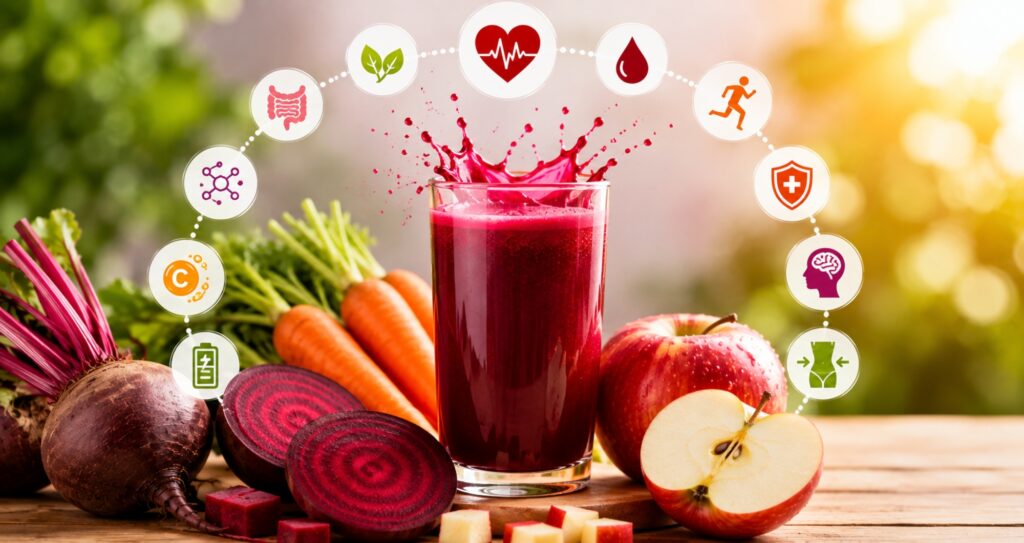
One reason this combination is popular is its variety.
Beetroot, carrots and apples contain different naturally occurring compounds. Combining them gives you a broader mix than relying on one ingredient alone.
Carrots, for example, are a source of carotenoids such as beta-carotene. Your body can convert some provitamin A carotenoids into vitamin A, which supports normal vision, immune function and growth. (Office of Dietary Supplements)
That’s one reason variety matters when you’re planning meals.
2. Beetroot Provides Dietary Nitrates
Beetroot is particularly interesting because it contains inorganic nitrate.
Your body can convert dietary nitrate through several steps, including conversion to nitric oxide. Nitric oxide plays a role in blood vessel relaxation.
Research has found that beetroot juice may help lower blood pressure in some adults. A 2024 systematic review of randomized trials found a reduction in clinical systolic blood pressure among people with hypertension, although the researchers rated the certainty of evidence as low and called for cautious interpretation. (PubMed)
So yes, there is some science behind the beetroot part of ABC juice.
But don’t replace prescribed blood-pressure medicine with juice.
3. It May Support Heart-Healthy Eating
The ingredients fit naturally into a diet rich in fruits and vegetables.
Beetroot brings nitrates and plant compounds. Carrots contribute carotenoids. Apples provide fiber when eaten whole.
One medium apple, for example, provides about 4 grams of dietary fiber along with vitamin C and other nutrients. (SnapEd)
The bigger picture matters more than one drink.
A diet that regularly includes vegetables, fruits, whole grains, legumes, nuts and other minimally processed foods is a much stronger foundation for heart health.
4. It Can Add Carotenoids to Your Diet
Carrots are well known for beta-carotene.
Beta-carotene is a provitamin A carotenoid. Your body can convert it into vitamin A when needed. Vitamin A supports normal vision and the immune system, among other functions. (Office of Dietary Supplements)
This is one reason colourful vegetables deserve a regular place on your plate.
A practical tip?
Don’t think only about carrots. Include other orange, yellow and green vegetables throughout the week too.
5. It Can Be an Easy Way to Include More Plant Foods
Let’s be realistic.
Some mornings are rushed.
You may skip breakfast, grab tea and biscuits, and suddenly it’s lunchtime.
A vegetable-and-fruit-based drink can be convenient when you are struggling to include produce in your routine.
Still, convenience shouldn’t mean replacing every whole fruit and vegetable with juice.
Whole foods generally give you more fiber and require more chewing, which can also affect how filling they feel.
6. It May Be Useful Around Exercise
Beetroot juice has received attention in sports nutrition because dietary nitrate may influence nitric oxide availability and exercise-related processes.
Research has investigated beetroot juice in areas such as exercise tolerance and endurance. A systematic review has reported potential effects on oxygen delivery and exercise performance, though results can vary depending on the person, dose and type of activity. (PubMed)
That doesn’t mean you need ABC juice before every workout.
For most people, overall nutrition, hydration, sleep and appropriate training matter far more.
7. It Can Help Add Variety to Your Morning Routine
Healthy eating doesn’t have to mean eating the same breakfast every day.
You could have:
- Whole fruit with breakfast on one day
- Vegetable-based meals on another
- ABC juice occasionally
- A smoothie with all the ingredients on another day
Variety can make healthy eating easier to maintain.
And honestly, that’s often more useful than chasing one “perfect” drink.
8. Apple Adds Natural Sweetness
Beetroot and carrot have earthy, slightly sweet flavours.
Apple helps balance that taste.
This can make the combination easier to drink without adding sugar.
That’s useful if you’re trying to move away from sweetened beverages.
Still, remember that the natural sugars in juice are still sugars. A large glass can contain quite a bit of carbohydrate even when you haven’t added table sugar.
9. It Can Provide Vitamin C From Apple
Apples contain vitamin C, although they are not among the richest sources compared with foods such as citrus fruits, guava or peppers.
USDA data lists about 9 mg of vitamin C in one medium apple. (SnapEd)
The exact amount in your juice will depend on how much apple you use and how the juice is prepared.
Think of the drink as contributing to your overall nutrient intake rather than meeting your entire vitamin requirement.
10. It Can Be a Better Choice Than Sugary Drinks
This is a practical comparison.
If you’re choosing between a homemade drink made from fruits and vegetables and a sugar-sweetened soft drink, the first option can provide more useful nutrients.
But there is a catch.
Not every packaged “fruit drink” is the same as fresh juice.
Check the label for:
- Added sugar
- Percentage of actual juice
- Serving size
- Ingredients
- Calories
The Dietary Guidelines distinguish 100% fruit juice from fruit drinks with added sugars. (Dietary Guidelines)
11. It Can Encourage Better Food Choices
Sometimes a small habit creates another one.
You start preparing ABC juice in the morning.
Then you start buying more vegetables.
Then you add a salad to lunch.
Then you reduce sugary drinks.
The juice itself isn’t responsible for all those changes. But it can become part of a larger healthy routine.
That is the way I’d look at it.
12. It Can Be Part of a Balanced Nutrition Plan
This may be the most important benefit.
ABC juice doesn’t need to “detox” your body or burn fat to be useful.
It can simply be one way to consume plant foods.
If your overall diet includes adequate protein, fiber, healthy fats, vegetables, fruits and whole grains, a small serving of homemade ABC juice can fit into that pattern.
That’s a much more realistic approach than expecting one drink to fix your diet.
Is ABC Juice Good for Weight Loss?
This is one of the first questions people ask.
ABC juice isn’t a weight-loss treatment.
Weight management depends on your overall food intake, physical activity, sleep, eating habits and many other factors.
Juice can also be less filling than eating the whole fruits and vegetables because much of the fiber is lost during juicing.
If you’re trying to manage your weight, consider having the juice in a sensible portion and keeping whole fruits and vegetables in your meals.
A dietitian can also help you decide whether it fits your individual calorie and nutrition needs.
What Is the Best Way to Drink Beetroot, Carrot and Apple Juice?
There isn’t one magical “best time.”
You can have it as part of breakfast or another meal depending on your routine.
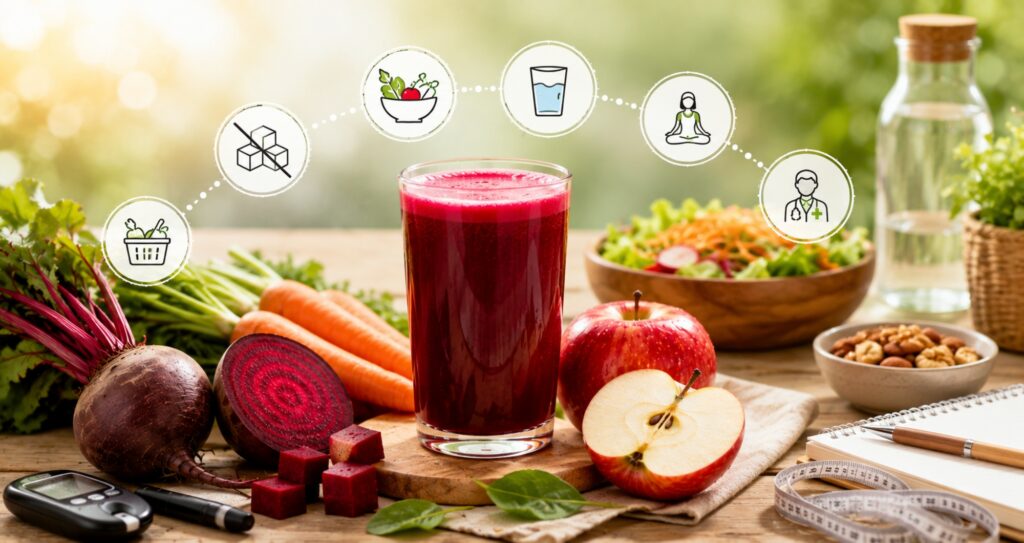
A few practical tips:
- Use fresh ingredients when possible.
- Don’t add sugar or syrup.
- Keep the portion reasonable.
- Avoid replacing all whole fruits and vegetables with juice.
- If you are managing blood sugar, consider the carbohydrate content of the whole meal.
- If you’re taking medication or have a medical condition, ask your doctor or dietitian whether regular beetroot juice is appropriate.
One more thing: beetroot can temporarily turn urine or stools pink or red. This can happen after eating beetroot and isn’t necessarily a sign of bleeding. If you’re unsure about a symptom, speak with a healthcare professional.
ABC Juice vs Whole Fruits and Vegetables
| Option | Main advantage | Main limitation |
| ABC juice | Convenient and easy to consume | Usually lower in fiber |
| Whole apple + carrot + beetroot | More chewing and fiber | Less convenient for some people |
| Smoothie with whole ingredients | Can retain more fiber | Larger portion can be easy to consume quickly |
For everyday eating, whole fruits and vegetables should still have a major place in your diet. Dietary guidance recommends that at least half of fruit intake come from whole fruit rather than 100% juice. (Dietary Guidelines)
Common Mistakes to Avoid
Drinking a huge glass
More isn’t always better.
A large serving can add more calories and natural sugars than you expect.
Adding sugar
The apple already provides sweetness.
There’s usually no need to add sugar, honey, or syrup.
Calling it a detox drink
Your body already has organs that process and remove waste. Calling ABC juice a “detox” isn’t a good reason to drink it.
Replacing meals with juice
Juice doesn’t provide everything your body needs.
A balanced meal needs more than fruits and vegetables.
Assuming it treats hypertension
Research on beetroot juice and blood pressure is promising, but it doesn’t make it a replacement for medical treatment. (PubMed)
Who Should Be Careful With ABC Juice?
Most healthy adults can include fruits and vegetables as part of a balanced diet. Still, individual needs differ.
Talk to your doctor or a registered dietitian if you:
- Take medicines that affect blood pressure
- Have kidney-related dietary restrictions
- Need to carefully manage blood sugar
- Have a medical condition requiring a specific diet
- Are pregnant and considering large amounts of concentrated juice
- Are you unsure how juice fits into your nutrition plan
A Dietitian in Bangalore can help turn general nutrition advice into something that actually fits your meals, lifestyle and health needs.
Frequently Asked Questions
What are the main beetroot, carrot and apple juice benefits?
The combination provides plant-derived nutrients, including carotenoids from carrots and dietary nitrate from beetroot. Apple contributes nutrients such as vitamin C. Beetroot juice has also been studied for potential effects on blood pressure and exercise-related outcomes. (PubMed)
Can I drink ABC juice every day?
There isn’t a universal daily recommendation for ABC juice. If you enjoy it, consider it as part of a varied diet rather than a replacement for whole fruits and vegetables. Your ideal amount depends on your overall diet, health needs and the ingredients used.
Is beetroot, carrot and apple juice good for weight loss?
It can fit into a balanced weight-management diet, but it doesn’t directly cause weight loss. Juice is generally less filling than whole fruits and vegetables because it contains less fiber. Portion size and your overall eating pattern matter more.
Does ABC juice lower blood pressure?
Beetroot juice has been studied for its potential effect on blood pressure because beetroot contains dietary nitrate. Some systematic reviews have found reductions in systolic blood pressure, but evidence quality and results vary. It should not replace prescribed blood-pressure treatment. (PubMed)
Is ABC juice better than eating whole fruits?
Not necessarily. Whole fruits and vegetables provide fiber and require more chewing. Juice can be convenient, but it should complement rather than completely replace whole produce. Dietary guidelines recommend that most fruit intake come from whole fruit. (Dietary Guidelines)
What is the difference between ABC juice and Mitha Aahara ABC Powder?
The answer depends on the ingredients, processing method and nutrition profile of the specific Mitha Aahara product. If you’re comparing them, check the product label, ingredient list, serving size and preparation instructions rather than assuming a powder has the same nutritional profile as freshly prepared juice.
Final Takeaway
Beetroot, carrot and apple juice can be a convenient way to bring different plant foods into your routine.
Its most interesting nutritional feature is probably beetroot’s nitrate content. Carrots add beta-carotene, while apples contribute nutrients and natural sweetness. Research on beetroot juice suggests possible benefits for blood pressure, though it should never be treated as a cure or a substitute for prescribed care. (PubMed)
The simplest approach is also the most sensible one.
Enjoy ABC juice in moderation, keep whole fruits and vegetables in your diet, and focus on your overall eating pattern rather than expecting one drink to do everything.
For personalised nutrition advice, consider speaking with a qualified dietitian in Bangalore who can assess your dietary needs and help you decide how a product such as Mitha Aahara ABC Powder may fit into your routine.
Medical review note: Nutrition and health claims should be reviewed by a qualified dietitian or healthcare professional before publication, especially claims relating to hypertension, weight loss, diabetes or other medical conditions.
Sources
- NIH Office of Dietary Supplements — Vitamin A and Carotenoids (Office of Dietary Supplements)
- USDA — Apple nutrition information (SnapEd)
- Dietary Guidelines for Americans — Fruit and fruit juice guidance (Dietary Guidelines)
- PubMed — Systematic reviews on beetroot juice, dietary nitrate and blood pressure (PubMed)