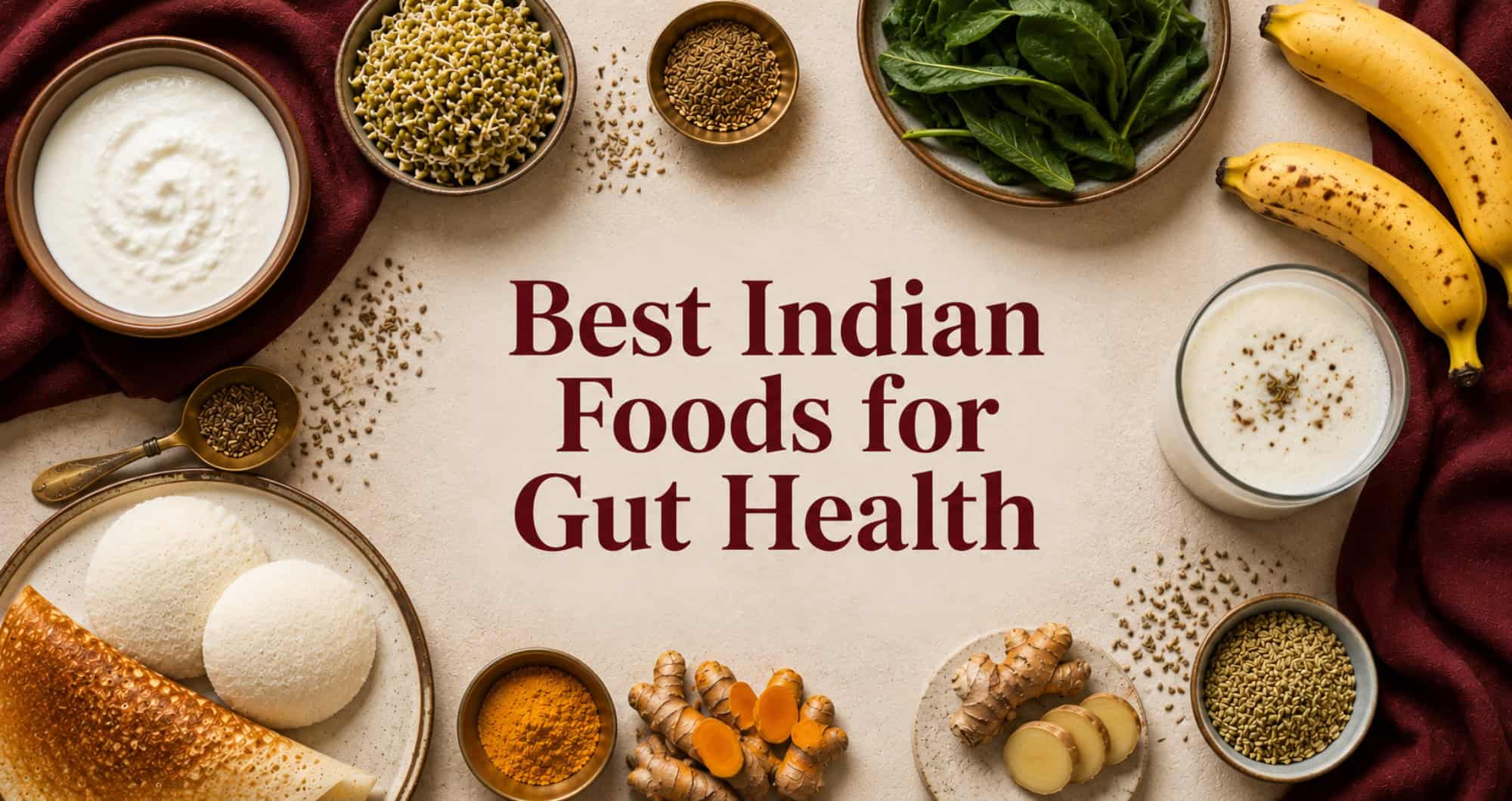
If you often deal with bloating, constipation, irregular bowel movements, or a heavy feeling after meals, your everyday food choices may be worth looking at. Some of the best Indian foods for gut health are actually simple foods that many Indian families already eat, such as dal, curd, vegetables, fruits, whole grains, and fermented foods.
A gut-friendly diet does not have to mean expensive probiotic products or imported superfoods. In many cases, eating enough fibre, including different plant foods, drinking enough water, and adding suitable fermented foods can support better digestion. Research also shows that diet can influence the gut microbiome, although individual responses can differ.
Quick Answer
The best Indian foods for gut health include curd, buttermilk, dal, chickpeas, beans, whole wheat, millets, oats, vegetables, leafy greens, guava, papaya, bananas, flaxseeds, and fermented foods such as idli and dosa.
These foods provide fibre, plant compounds, and in some cases, live microorganisms that can support the gut. The key is variety rather than eating one “gut health” food every day.
What Makes Food Good for Your Gut?
Your gut contains trillions of microorganisms. What you eat can influence the environment in which these microbes live.
Fibre is one of the main pieces of the puzzle. It is found in foods such as whole grains, pulses, vegetables, fruits, nuts, and seeds. Indian dietary guidelines also recommend including whole grains, millets, legumes, vegetables, and other fibre-rich foods as part of a balanced diet.
Fermented foods can also be useful. But there is a common mistake here.
Not every fermented food automatically counts as a probiotic food with proven health benefits. The microorganisms and strains present matter.
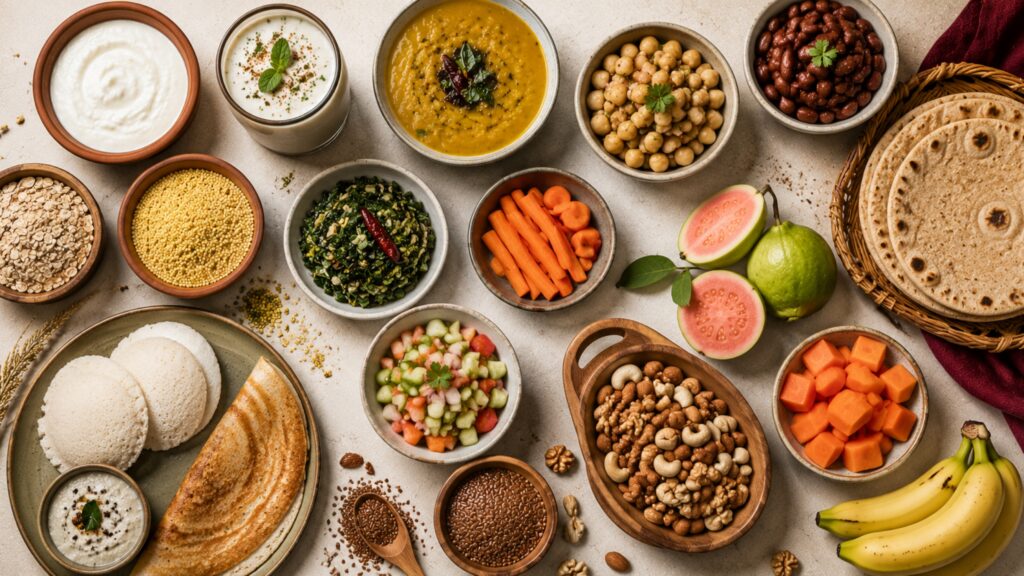
15 Best Indian Foods for Gut Health
1. Curd
Plain curd is one of the easiest foods to include in an Indian diet.
It can provide live microorganisms, depending on how it is prepared and stored. Yogurt and other fermented dairy foods are among the foods associated with probiotics.
Try having a small bowl of plain curd with lunch.
If dairy makes you uncomfortable, don’t force yourself to eat it. Lactose intolerance and individual tolerance can vary.
2. Buttermilk
A simple glass of unsweetened chaas can be a comfortable addition to meals for many people.
You can add roasted cumin, coriander, or a little mint for flavour.
Avoid turning it into a sugary drink. That defeats much of the purpose of choosing it as a regular part of your diet.
3. Dal
Moong dal, masoor dal, toor dal, and other pulses provide fibre and plant protein.
They are also easy to include in regular meals.
If dal causes gas, don’t immediately assume that you should stop eating pulses. Start with smaller portions and increase gradually. Soaking and cooking them properly can also make them easier to tolerate.
4. Chickpeas
Chana is another useful source of fibre.
You can have boiled chana in a salad, make chole, or add a small portion to a mixed meal.
A practical tip is to avoid suddenly eating a very large bowl of chickpeas if your usual diet is low in fibre. Your gut may need time to adjust.
5. Beans
Rajma, lobia, and other beans can contribute fibre to your diet.
They are nutritious, but they can also cause gas in some people.
Soak them properly, cook them thoroughly, and pay attention to your portion size.
6. Whole Wheat
Whole wheat roti can be a better fibre source than highly refined grain products.
You don’t need to eliminate rice to improve gut health. A balanced Indian meal can include roti or rice along with dal, vegetables, and other plant foods.
7. Millets
Ragi, bajra, jowar, and other millets can add fibre and variety to your meals.
The 2024 Dietary Guidelines for Indians list millets among fibre-containing cereal choices.
You can use them for rotis, dosa, porridge, or other familiar dishes.
8. Oats
Oats are not traditionally Indian, but they fit easily into Indian meals.
Try savoury oats with vegetables instead of always preparing sweet oatmeal.
The goal is not to find one magical food. It is to create a diet with different sources of fibre.
9. Leafy Green Vegetables
Spinach, methi, amaranth, drumstick leaves, and other leafy greens can add fibre and micronutrients to your meals.
One easy approach is to add a vegetable preparation to both lunch and dinner.
Even a simple palak dal counts.
10. Carrots
Carrots provide fibre and can be eaten raw, cooked, or added to salads and curries.
If raw vegetables cause bloating, try lightly cooking them instead.
This is something people often overlook. A food can be healthy but still not feel comfortable for everyone in the same form.
11. Guava
Guava is a useful fruit choice when you want to increase fibre intake.
Eat the fruit rather than relying on packaged guava juice.
Whole fruit gives you fibre that is largely lost when fruit is processed into juice.
12. Papaya
Papaya is commonly included in Indian diets and provides fibre, water, and nutrients.
Some people find ripe papaya easy to include as part of breakfast or a snack.
It is not a treatment for digestive disease, though. Think of it as one nutritious food within a balanced diet.
13. Banana
Bananas are convenient and easy to carry.
They can also provide fibre, and their composition changes as they ripen.
If you are managing a digestive condition, your tolerance may depend on the type and ripeness of the banana, so notice how your body responds.
14. Flaxseeds
Ground flaxseeds can add fibre to your diet.
You can mix a small amount into curd, oats, chutney, or a homemade smoothie.
Start with a modest quantity and drink enough water. Increasing fibre quickly without enough fluid can make constipation feel worse for some people.
15. Fermented Foods Such as Idli and Dosa
Idli and dosa are made using fermented batter, which makes them interesting additions to a varied diet.
Fermentation changes the food and can introduce microorganisms, but it does not mean every fermented food has proven probiotic effects. Research on fermented foods and the human gut microbiome is promising, but the evidence is still developing.
Having idli with sambar and vegetables can be a more balanced meal than eating plain idli alone.
Which Indian Foods Are Best for Constipation?
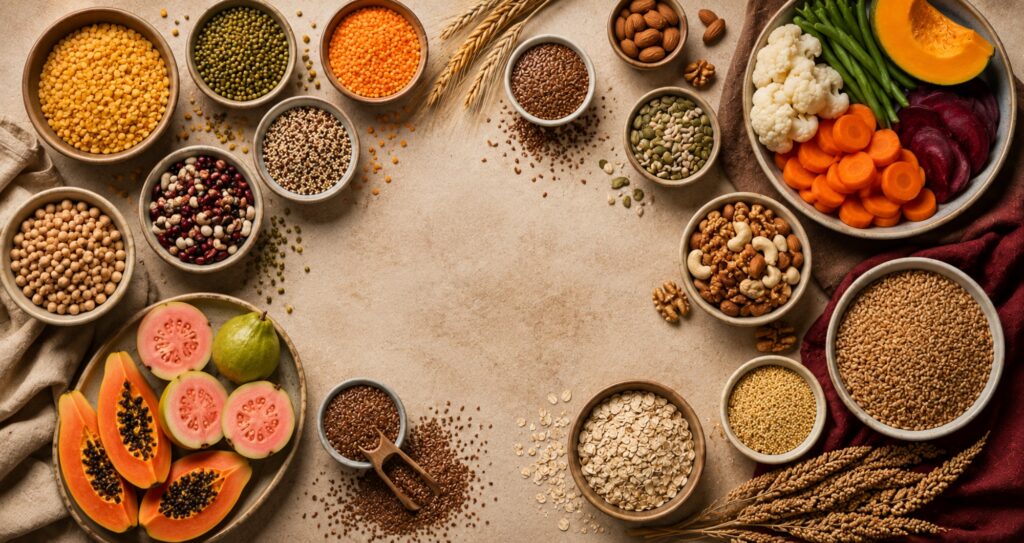
If constipation is your main concern, focus on gradually increasing fibre from:
- Dal and pulses
- Vegetables
- Fruits such as guava and papaya
- Whole grains
- Millets
- Flaxseeds
- Nuts and seeds
Water matters too.
A common mistake is suddenly adding lots of fibre while drinking very little water. That can leave you feeling more bloated instead of better.
What About Bloating After Eating Healthy Foods?
This happens more often than people think.
Foods such as rajma, chana, and some vegetables can produce more gas during digestion. That does not automatically mean they are “bad for your gut.”
Try:
- Smaller portions
- Gradually increasing fibre
- Properly soaking and cooking pulses
- Eating slowly
- Chewing food well
- Keeping a simple food-and-symptom diary
If a food repeatedly causes significant symptoms, discuss it with a qualified healthcare professional or Gut Health Nutritionist rather than removing large groups of foods on your own.
A Simple Indian Gut-Friendly Meal Example
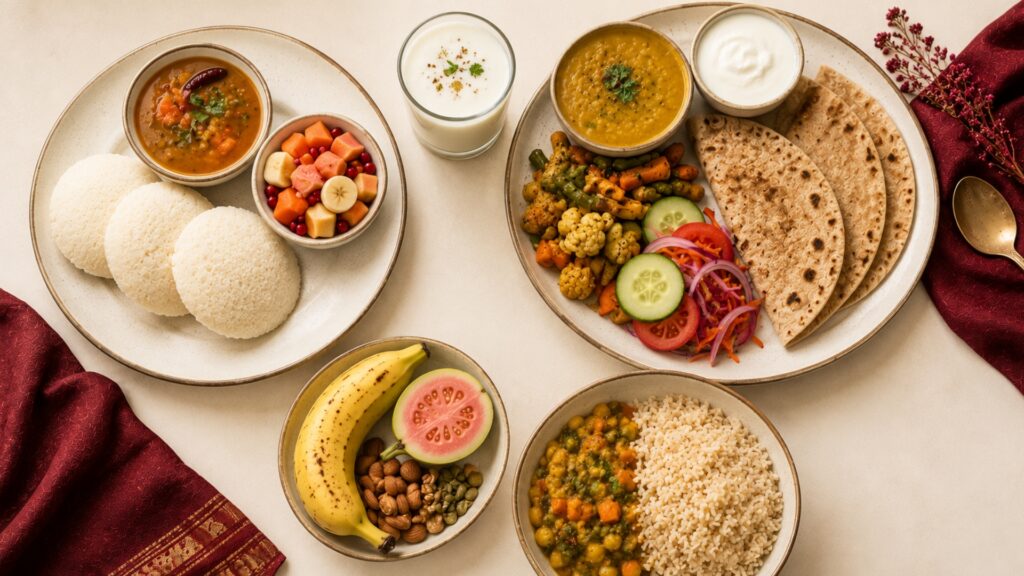
You don’t need a complicated meal plan.
Breakfast:
Idli with sambar and a side of fruit
Lunch:
2 whole wheat rotis, dal, cooked vegetables, salad, and curd
Snack:
Guava or banana with a small portion of nuts
Dinner:
Millet or rice with vegetables and a pulse-based curry
Optional:
Unsweetened buttermilk with lunch if you tolerate dairy
This kind of meal pattern gives you different sources of fibre and plant foods instead of depending on one food.
Common Mistakes to Avoid
Eating only one “superfood”
No single food can fix your gut.
Your gut microbiome interacts with your overall dietary pattern, not just one ingredient.
Increasing fibre too quickly
If your current diet contains very little fibre, suddenly eating huge amounts of salads, beans, and seeds can cause gas and bloating.
Increase gradually.
Depending on probiotic supplements
Probiotics are not one-size-fits-all. Different strains can have different effects, and not every product labelled as a probiotic has proven benefits for every condition.
Ignoring your symptoms
Persistent abdominal pain, blood in the stool, unexplained weight loss, ongoing diarrhoea, or severe constipation should not be managed only through diet experiments.
Speak with a doctor if symptoms are persistent or concerning.
Can Indian Food Improve Gut Health?
Yes, a well-planned Indian diet can provide many foods that support a healthy gut.
The strongest approach is not to chase a perfect list of foods. Instead, build meals around variety, fibre-rich plant foods, minimally processed foods, adequate fluids, and suitable fermented foods.
Research supports the role of dietary fibre and minimally processed foods in shaping the gut microbiome, while studies on fermented foods suggest potential benefits but also show that individual responses vary.
Frequently Asked Questions
What are the best Indian foods for gut health?
Some good choices include dal, chickpeas, beans, whole wheat, millets, vegetables, leafy greens, guava, papaya, bananas, flaxseeds, curd, buttermilk, and fermented foods such as idli and dosa. Choose a variety rather than relying on one food.
Is curd good for gut health?
Plain curd can be a useful food because some varieties contain live microorganisms. The actual microbial content can vary by product and preparation. If dairy causes you digestive discomfort, choose another suitable food rather than forcing yourself to eat curd.
Which Indian foods are high in fibre?
Pulses, millets, whole grains, vegetables, fruits, nuts, and seeds are important fibre sources. ICMR-NIN dietary guidance lists pulses, millets, cereals, nuts, fruits, and vegetables among foods that contribute dietary fibre.
What should I eat for better digestion?
Start with simple meals containing vegetables, pulses, whole grains, fruit, and enough fluids. Eat slowly and increase fibre gradually if your current intake is low.
Can I eat rice for good gut health?
Yes. Rice does not need to be removed from a gut-friendly diet. You can pair rice with dal, vegetables, pulses, curd, or other nutrient-rich foods. Portion size and the overall meal pattern matter more than treating one grain as automatically good or bad.
Should I see a Gut Health Nutritionist for digestive problems?
If bloating, constipation, diarrhoea, or food-related discomfort keeps coming back, speaking with a qualified dietitian or nutrition professional can help you identify patterns and build a diet around your individual needs. A doctor should assess persistent or serious symptoms.
Final Takeaway
The best Indian foods for gut health are not necessarily exotic or expensive.
Your regular dal, vegetables, fruits, whole grains, millets, curd, and fermented foods can all have a place in a gut-friendly eating pattern.
Start small.
Add one extra vegetable to your lunch. Include fruit instead of juice. Try a different pulse. Add a little ground flaxseed. Drink enough water.
Over time, these small choices can make your overall diet much more supportive of digestive health.