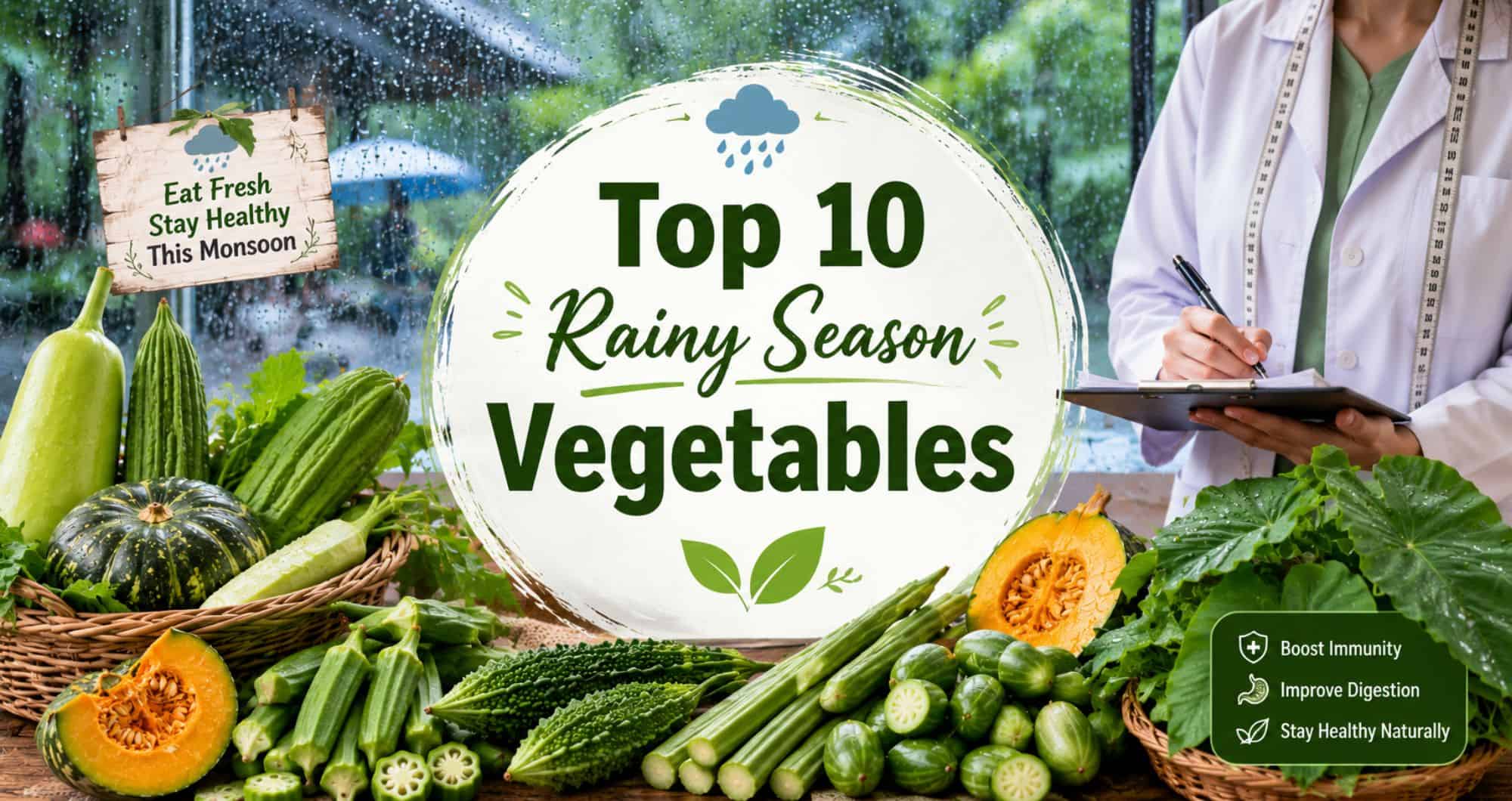
The rainy season brings relief from the summer heat. The cool breeze, fresh air, and hot homemade meals make this season feel special. But let’s be honest. It also brings coughs, colds, stomach infections, and low immunity for many people.
That’s why what you eat during the monsoon matters.
Seasonal vegetables are usually fresher, more nutritious, and easier for your body to digest. They also provide vitamins, minerals, fiber, and antioxidants that help your immune system stay strong.
As the Best Dietitian in Bangalore, we often tell people not to chase expensive superfoods when simple seasonal vegetables can do so much for their health. Nature already gives us the right foods for every season. We just need to make better choices.
In this guide, you’ll discover the top rainy season vegetables recommended by dietitians, their health benefits, and easy ways to include them in your daily meals.
Why Should You Eat Seasonal Vegetables During the Rainy Season?
Seasonal vegetables are harvested at the right time. That means they usually taste better and contain more nutrients compared to vegetables stored for long periods.
During the monsoon, your digestive system can become more sensitive. Fresh vegetables help support digestion without putting extra stress on your gut.
Some benefits include:
- Better immunity
- Improved digestion
- More dietary fiber
- Rich source of vitamins and minerals
- Lower risk of constipation
- Helps maintain a healthy weight
- Supports heart health
Simple food often works better than processed food. That’s something many people forget.
Top 10 Rainy Season Vegetables Recommended by Dietitians
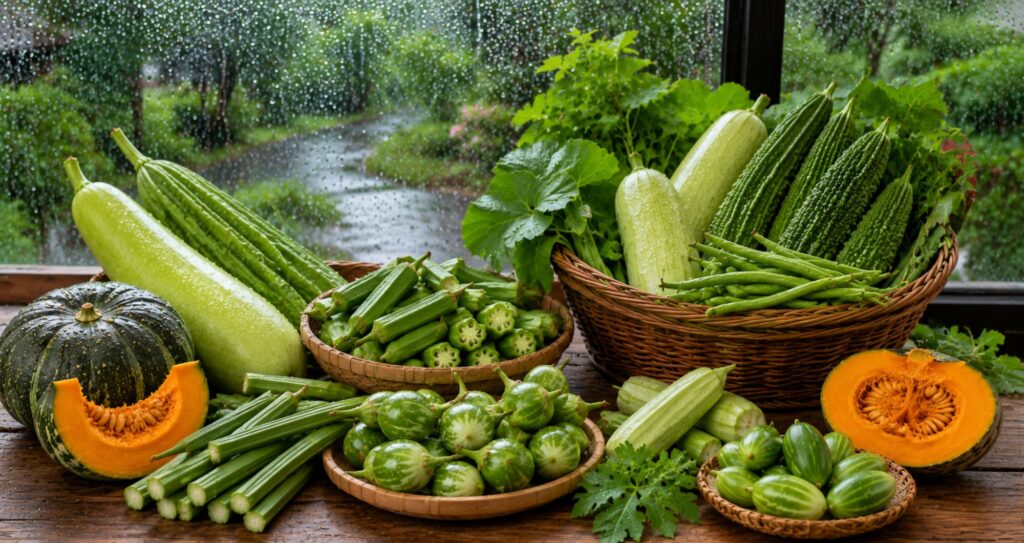
1. Bottle Gourd (Lauki)
Bottle gourd may not be everyone’s favourite, but it’s one of the healthiest vegetables you can eat during the rainy season.
It contains plenty of water and is gentle on digestion.
Health benefits
- Keeps the body hydrated
- Easy to digest
- Supports weight management
- Rich in potassium
- Good for heart health
Easy ways to eat it
- Bottle gourd curry
- Lauki soup
- Lauki dal
- Bottle gourd paratha
2. Ridge Gourd (Turai)
Ridge gourd is light, soft, and full of nutrients. It doesn’t feel heavy after eating, which makes it suitable for the monsoon.
Health benefits
- Rich in dietary fiber
- Supports digestion
- Helps control blood sugar
- Good source of Vitamin C
- May improve skin health
Recipe ideas
- Turai sabzi
- Ridge gourd chutney
- Turai with moong dal
3. Bitter Gourd (Karela)
Not everyone enjoys the taste. That’s understandable.
Still, bitter gourd offers many health benefits that make it worth adding to your meals once or twice a week.
Health benefits
- Supports healthy blood sugar levels
- Rich in antioxidants
- Good for digestion
- Helps liver function
- Contains Vitamin C
Healthy recipes
- Stuffed karela
- Karela stir fry
- Baked bitter gourd chips
4. Okra (Bhindi)
Bhindi is a common vegetable in Indian kitchens.
It contains soluble fiber that supports gut health and keeps you full for longer.
Health benefits
- Improves digestion
- Rich in folate
- Supports heart health
- Helps manage cholesterol
- Good source of Vitamin K
Recipe ideas
- Dry bhindi masala
- Bhindi curry
- Grilled okra
5. Pumpkin (Kaddu)
Pumpkin is packed with beta-carotene, which your body converts into Vitamin A.
This nutrient supports immunity and eye health.
Health benefits
- Boosts immunity
- Rich in antioxidants
- Supports eye health
- Good for skin
- Low in calories
Healthy dishes
- Pumpkin soup
- Pumpkin curry
- Roasted pumpkin
6. Cluster Beans (Guar)
Cluster beans are rich in fiber and plant nutrients.
Many people overlook them, but they deserve a place in your weekly meal plan.
Health benefits
- Supports digestion
- Helps regulate blood sugar
- Good source of calcium
- High in fiber
- Supports bone health
Recipe ideas
- Guar beans stir fry
- Guar with potatoes
- Guar sabzi
7. Ivy Gourd (Tindora)
Tindora cooks quickly and pairs well with Indian spices.
Health benefits
- Supports blood sugar control
- Rich in antioxidants
- Good source of fiber
- Helps digestion
- Contains Vitamin C
Ways to enjoy it
- Tindora fry
- Tindora curry
- Stuffed tindora
8. Ash Gourd (Petha)
Ash gourd contains a high amount of water and is naturally cooling.
It works well even during humid weather.
Health benefits
- Keeps the body hydrated
- Supports digestion
- Low in calories
- Rich in Vitamin C
- Good for gut health
Recipe ideas
- Ash gourd curry
- Ash gourd soup
- Ash gourd stew
9. Colocasia Leaves (Arbi Leaves)
These leaves are full of nutrients but should always be cooked properly.
Health benefits
- Rich in iron
- High in calcium
- Good source of Vitamin A
- Supports healthy bones
- Contains dietary fiber
Popular dishes
- Patra
- Steamed colocasia rolls
- Arbi leaf curry
10. Drumstick (Moringa)
Drumsticks are loaded with nutrients and fit perfectly into a healthy Indian diet.
Health benefits
- Rich in Vitamin C
- Supports immunity
- Good source of calcium
- High in antioxidants
- Supports healthy bones
Healthy recipes
- Drumstick sambar
- Moringa soup
- Drumstick curry
Nutritional Comparison of Rainy Season Vegetables
| Vegetable | Rich In | Main Benefit |
| Bottle Gourd | Potassium, Water | Hydration |
| Ridge Gourd | Fiber | Digestion |
| Bitter Gourd | Vitamin C | Blood Sugar Support |
| Okra | Folate | Gut Health |
| Pumpkin | Vitamin A | Immunity |
| Cluster Beans | Fiber | Weight Management |
| Ivy Gourd | Antioxidants | Blood Sugar Support |
| Ash Gourd | Water | Digestion |
| Colocasia Leaves | Iron | Healthy Blood |
| Drumstick | Calcium | Bone Health |
How to Buy Fresh Rainy Season Vegetables
Fresh vegetables contain more nutrients.
When shopping, look for:
- Bright natural colour
- Firm texture
- No dark spots
- No fungal growth
- Fresh smell
- Crisp leaves
- Avoid vegetables with cuts or soft patches
Buying from trusted local vendors can also help.
Healthy Cooking Tips During the Monsoon
Cooking methods matter almost as much as the vegetables themselves.
Try these simple tips.
- Wash vegetables thoroughly.
- Cook vegetables properly.
- Avoid eating raw leafy vegetables during heavy rains.
- Use less oil.
- Steam whenever possible.
- Add turmeric, ginger, garlic, and black pepper.
- Eat freshly prepared meals.
Simple cooking preserves nutrients and reduces the risk of food contamination.
Common Mistakes People Make During the Rainy Season
Many people unknowingly make food choices that don’t support their health.
Some common mistakes include:
- Eating too much fried food
- Drinking less water
- Skipping vegetables
- Eating street food frequently
- Storing cooked food for long hours
- Not washing vegetables properly
Small changes can make a noticeable difference over the season.
Sample One-Day Monsoon Meal Plan
Breakfast
- Vegetable poha with carrots and peas
- Herbal tea
Mid-morning
- Seasonal fruit
Lunch
- Brown rice
- Bottle gourd dal
- Bhindi sabzi
- Curd
Evening snack
- Roasted chana
- Ginger tea
Dinner
- Pumpkin soup
- Ridge gourd curry
- Whole wheat roti
Simple meals like these provide fiber, protein, vitamins, and minerals without making you feel too heavy.
What Does a Dietitian Recommend During the Rainy Season?
A balanced diet always works better than following food trends.
As the Best Dietitian in Bangalore, we usually recommend:
- Fill half your plate with vegetables.
- Choose seasonal produce.
- Include protein in every meal.
- Drink enough water.
- Reduce fried snacks.
- Eat freshly cooked food.
- Maintain regular meal timings.
Your body responds well to consistency.
You don’t need complicated diets.
You need habits you can actually follow.
Why Personalized Nutrition Matters
Every person has different nutritional needs.
Someone managing diabetes may need different meal choices than someone trying to lose weight.
A person with digestive issues may tolerate certain vegetables better than others.
That’s why personalized nutrition can make a big difference.
Working with the Best Dietitian in Bangalore helps you build a meal plan based on your health goals, medical history, food preferences, and lifestyle instead of following generic advice found online.
Frequently Asked Questions
Which vegetables are best during the rainy season?
Bottle gourd, ridge gourd, pumpkin, okra, drumstick, ash gourd, bitter gourd, cluster beans, ivy gourd, and colocasia leaves are among the healthiest choices.
Can rainy season vegetables improve immunity?
Yes. Many seasonal vegetables contain Vitamin C, Vitamin A, antioxidants, and minerals that support normal immune function.
Are leafy vegetables safe during the monsoon?
Leafy vegetables should be washed thoroughly and cooked properly before eating during the rainy season.
Which rainy season vegetable is best for weight loss?
Bottle gourd, ridge gourd, pumpkin, and ash gourd are low in calories and high in water and fiber, making them suitable for weight management.
Should people with diabetes eat bitter gourd?
Bitter gourd can be part of a balanced diet for people with diabetes, but meal planning should always be personalized based on individual health needs.
Final Thoughts
The rainy season is a good time to slow down and pay attention to what you’re eating.
Seasonal vegetables are simple, affordable, and packed with nutrients your body needs. They support digestion, help strengthen immunity, and make everyday meals healthier without much effort.
You don’t have to eat all ten vegetables every week. Start with two or three that you enjoy. Cook them in different ways. Keep your meals fresh and balanced.
If you’re looking for a meal plan that matches your health goals, consulting the Best Dietitian in Bangalore can help you make food choices that fit your lifestyle and support long-term wellness.