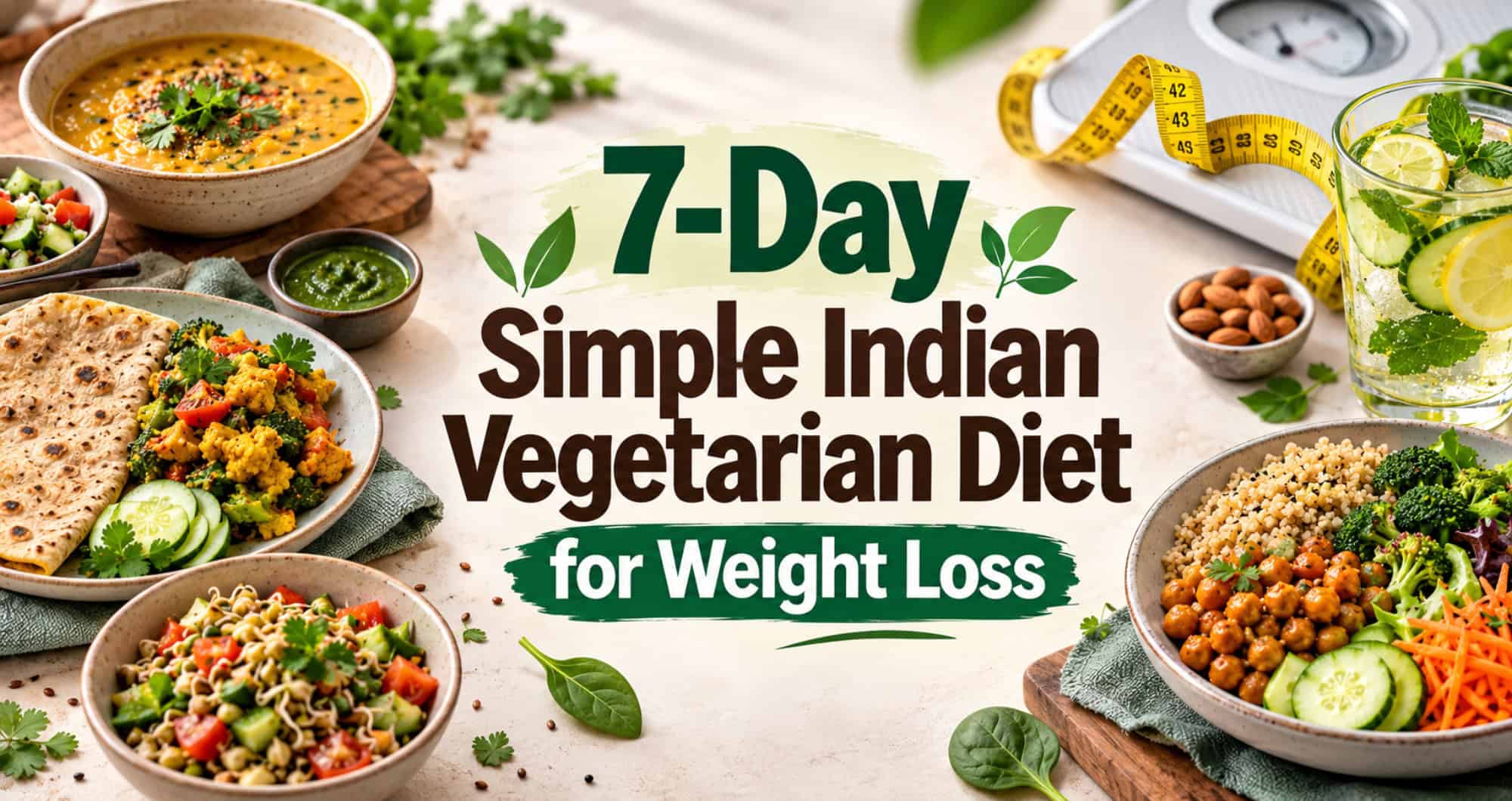
Losing weight on a vegetarian diet is absolutely possible. You do not need to stop eating rice, roti, dal, or your favourite Indian foods. The key is to build meals around protein, fibre, vegetables, healthy fats, and sensible portions.
A good Indian vegetarian diet for weight loss should also fit your daily routine. If your plan requires separate meals, expensive ingredients, or constant calorie counting, it may be difficult to follow for long.
At Mitha Aahara, nutrition plans are designed around a person’s health, routine, food preferences, and goals rather than using one diet chart for everyone.
Quick Answer
An Indian vegetarian diet for weight loss can include foods such as dal, beans, sprouts, paneer, curd, vegetables, whole grains, fruits, nuts, and seeds. A simple plate should contain a good protein source, plenty of vegetables, a moderate portion of carbohydrates, and some healthy fat.
You do not have to completely remove rice or roti. Portion size, meal balance, protein intake, activity, sleep, and consistency all matter.
What Should an Indian Vegetarian Diet for Weight Loss Include?
A common mistake is to think that vegetarian automatically means low-calorie or healthy.
It doesn’t.
A plate of vegetable pulao, potato curry, papad and pickle may be vegetarian, but it may not provide enough protein or fibre to keep you satisfied.
Instead, try to build your meals around these five groups:
| Food group | Indian examples |
| Protein | Dal, rajma, chana, sprouts, paneer, curd, tofu |
| Vegetables | Spinach, beans, carrot, cauliflower, bottle gourd, bhindi |
| Whole grains | Roti, oats, brown rice, millet, dalia |
| Healthy fats | Nuts, seeds, limited ghee, groundnut, sesame |
| Fruits | Apple, guava, orange, papaya, berries, seasonal fruits |
The goal is not to make every meal perfect. It is to make your overall eating pattern more balanced.
7-Day Indian Vegetarian Diet for Weight Loss
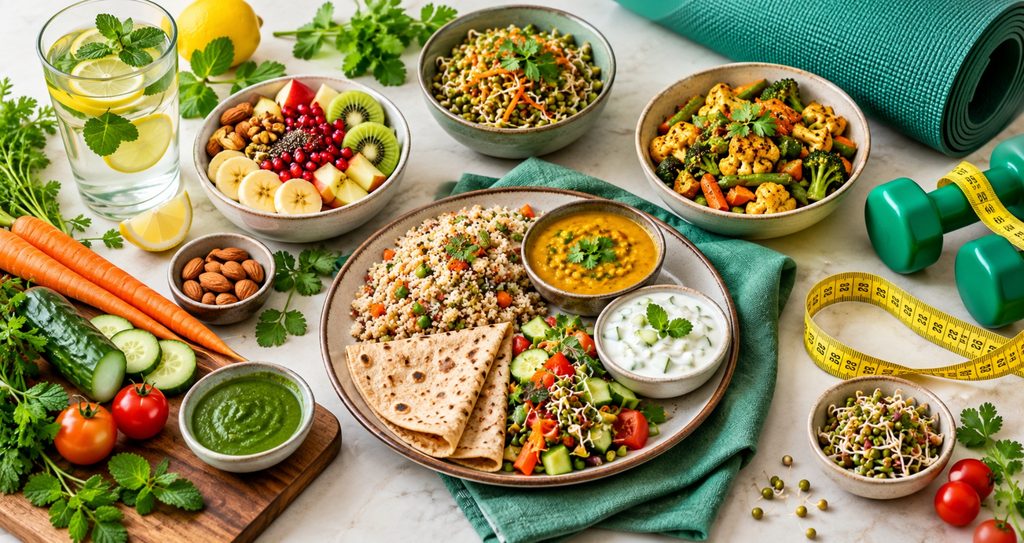
Here is a simple example of how you could structure a vegetarian week.
This is a general meal guide, not an individualized medical diet. Your portion requirements can vary based on age, activity, health conditions, medications, and nutritional needs.
Day 1
Breakfast: Vegetable moong dal chilla with curd
Mid-morning: One guava or apple
Lunch: 2 small rotis, dal, mixed vegetable sabzi and salad
Evening: Roasted chana with unsweetened tea
Dinner: Vegetable soup with paneer and sautéed vegetables
Day 2
Breakfast: Vegetable oats upma with curd
Mid-morning: Papaya
Lunch: Brown rice, rajma, cucumber salad and vegetables
Evening: A small handful of nuts
Dinner: 2 small rotis with tofu or paneer bhurji and vegetables
Day 3
Breakfast: Besan chilla with vegetables and curd
Mid-morning: Orange
Lunch: 2 rotis, chana curry, vegetable sabzi and salad
Evening: Sprouts chaat
Dinner: Moong dal khichdi with vegetables and curd
Day 4
Breakfast: Vegetable poha with peanuts and curd
Mid-morning: One seasonal fruit
Lunch: Millet roti, dal, leafy vegetables and salad
Evening: Roasted makhana
Dinner: Paneer or tofu stir-fry with vegetables
Day 5
Breakfast: Idli with sambar and vegetable chutney
Mid-morning: Guava
Lunch: Rice, sambar, vegetable poriyal and curd
Evening: Buttermilk with roasted chana
Dinner: 2 small rotis with mixed vegetable curry and dal
Day 6
Breakfast: Vegetable dalia with curd
Mid-morning: Apple
Lunch: 2 rotis, rajma or chole, vegetables and salad
Evening: Nuts and seeds
Dinner: Moong dal chilla stuffed with vegetables and paneer
Day 7
Breakfast: Paneer or vegetable stuffed roti with curd
Mid-morning: Papaya or orange
Lunch: Vegetable pulao with dal and cucumber raita
Evening: Sprouts chaat
Dinner: Light vegetable soup, dal and sautéed vegetables
Notice something?
There is no need to eat salads all day.
Indian food can stay on your plate.
How Much Rice or Roti Can You Eat?
This is one of the most common questions people ask when trying to lose weight.
The answer depends on your total energy needs, activity level, health conditions, and the rest of your meal.
Instead of completely removing rice or roti, try balancing your plate.
For example:
- ½ plate vegetables and salad
- ¼ plate protein
- ¼ plate rice, roti or another grain
You can also adjust the portions based on your hunger and nutritional needs.
Mitha Aahara’s approach focuses on personalized meal planning rather than giving everyone the same diet chart.
What Are the Best Vegetarian Protein Sources for Weight Loss?
Protein deserves special attention in a vegetarian diet.
If your meals mainly contain rice, roti, poha and bread, you may end up eating plenty of carbohydrates while falling short on protein.
Try adding:
- Dal
- Moong
- Rajma
- Chole
- Sprouts
- Paneer
- Tofu
- Curd
- Greek yogurt
- Soy-based foods
- Nuts and seeds
For example, instead of eating plain poha for breakfast, add peanuts and vegetables and pair it with curd.
Small changes like this can make a meal more filling.
Mitha Aahara also has dedicated nutrition guidance around high-protein Indian breakfast options, which fits naturally into a weight-loss meal plan.
What Should You Limit?
You do not need a long list of forbidden foods.
Focus on reducing foods that are easy to overeat and provide little nutritional value.
These can include:
- Sugary drinks
- Frequent sweets
- Deep-fried snacks
- Packaged biscuits
- Large portions of refined foods
- Frequent restaurant meals
- Excessive sauces and dressings
- Sugary breakfast cereals
And watch the “healthy snack” trap.
A handful of nuts can be nutritious. Eating several handfuls while working at your desk is a different story.
Portions still matter.
Common Mistakes on a Vegetarian Weight-Loss Diet
1. Eating too little protein
You may feel hungry again shortly after meals.
Try adding dal, curd, paneer, tofu, beans or sprouts.
2. Removing carbohydrates completely
There is usually no need to fear every carbohydrate.
Rice, roti, oats and millets can fit into a balanced diet.
The quantity and overall meal matter.
3. Drinking calories without noticing
Sweetened tea, coffee, juices and soft drinks can add extra calories without keeping you full.
Water, unsweetened beverages and plain buttermilk can be better everyday choices.
4. Eating healthy foods in unlimited quantities
Healthy does not always mean calorie-free.
Nuts, seeds, ghee and dried fruits are nutritious, but portions still matter.
5. Following someone else’s diet chart
Your friend may lose weight eating a particular breakfast every day. That does not mean the same routine is right for you.
Your activity, health history, medications, food preferences and lifestyle can all change what works.
Can a Vegetarian Diet Help With Long-Term Weight Loss?
Yes, a well-planned vegetarian diet can support healthy weight management.
The bigger question is whether you can follow it consistently.
A diet that works for two weeks but leaves you constantly hungry is difficult to maintain.
A better approach is to create meals you can realistically eat during busy weekdays, family gatherings, travel, and weekends.
For example, if you love rice, completely banning rice may make the diet harder to follow. Learning how to include an appropriate portion with dal, vegetables and curd may be much more practical.
This idea also fits Mitha Aahara’s broader approach of creating personalized nutrition plans around a person’s routine and preferences.
When Should You Speak to a Nutritionist?
A general diet plan may not be suitable if you have a health condition or a specific nutritional goal.
Consider professional guidance if you are dealing with:
- PCOS or PCOD
- Diabetes or insulin resistance
- Thyroid concerns
- Digestive problems
- High cholesterol
- Pregnancy or gestational diabetes
- Fertility-related nutrition needs
- Significant weight changes
- GLP-1 medication use
Mitha Aahara provides nutrition programs for areas including weight loss, PCOD, gut health, preventive nutrition, gestational diabetes, fertility and GLP-1 nutrition.
If you are searching for the Best Nutritionist in Bangalore, look beyond generic diet charts. Ask whether the nutritionist considers your health history, routine, food preferences, medical reports and long-term goals.
Frequently Asked Questions
What is the best Indian vegetarian diet for weight loss?
A balanced vegetarian diet can include dal, beans, sprouts, paneer, curd, vegetables, fruits, whole grains, nuts and seeds. Keep portions appropriate and include a protein source in your main meals. There is no single diet that works equally well for everyone.
Can I eat rice while trying to lose weight?
Yes. You do not necessarily need to eliminate rice for weight loss. A moderate portion of rice paired with protein, vegetables and curd can form part of a balanced meal. Your total food intake and individual nutritional needs matter more than simply avoiding one food.
What is the best vegetarian protein for weight loss?
There is no single best option. Dal, beans, chickpeas, rajma, sprouts, paneer, tofu, curd and other protein-rich vegetarian foods can all contribute to your intake. Variety is useful because different foods provide different nutrients.
Can I lose weight without eating salads?
Yes. Salads are one way to increase vegetable intake, but they are not compulsory. Cooked vegetables, soups, leafy greens, vegetable sabzis and other fibre-rich foods can also be part of a weight-loss diet.
Is a 7-day diet plan enough to lose weight?
A 7-day meal plan can give you structure, but meaningful weight management usually requires a longer-term approach. Your results depend on your overall eating pattern, activity, sleep, health conditions and consistency. Avoid expecting major changes from one week of dieting.
Final Thoughts
A good Indian vegetarian diet for weight loss does not need to be complicated.
Keep your meals balanced.
Include protein.
Eat plenty of vegetables.
Choose sensible portions of rice, roti and other grains.
Enjoy fruit.
Limit highly processed and fried foods.
And most importantly, choose a routine you can actually live with.
If your weight concerns are connected to PCOS, insulin resistance, digestive problems, diabetes, GLP-1 medication or another health condition, a personalized plan may be more useful than following a generic 7-day chart.
Mitha Aahara’s nutrition approach is based on understanding the individual rather than handing out the same diet plan to everyone.
Author
Sreemathy Venkatraman
Clinical Dietitian and Wellness Nutritionist, Mitha Aahara
23+ years of experience in nutrition and dietetics.
Medical & Nutrition Review
This article should be reviewed by a qualified clinical dietitian or healthcare professional before publication, especially because weight-loss nutrition can vary for people with medical conditions, pregnancy, eating disorders, or those taking medication.
Last Updated: September 2026