
Have you ever enjoyed a meal only to end up with a burning feeling in your chest a little later?
Or maybe you wake up with a sour taste in your mouth and wonder why it keeps happening.
If that’s you, you’re not alone.
Acidity is one of the most common digestive problems people deal with today. The frustrating part is that it often comes back, even after taking medicines that seem to work for a while.
The good news is that many people can reduce recurring acidity by making the right changes to their eating habits and lifestyle. The focus should not only be on getting temporary relief. It should be on understanding why acidity keeps returning.
At Mitha Aahara, we believe that good nutrition is one of the strongest tools for improving digestive health. If you’re looking for effective, long-term solutions, this guide to Permanent Acidity Relief will help you understand what really works. Learn how the right diet, simple lifestyle changes, and healthy habits can reduce acidity naturally and support lasting digestive wellness.
What Is Acidity
Your stomach naturally produces acid to digest food.
Sometimes, this acid flows back into the food pipe instead of staying in the stomach. That causes the burning sensation many people call heartburn.
You may also notice:
- Burning in the chest
- Sour taste in the mouth
- Frequent burping
- Bloating
- Upper stomach discomfort
- Feeling full very quickly
- Mild nausea
- Throat irritation
Occasional acidity can happen after a heavy meal.
If it becomes frequent, it’s time to look at your daily habits instead of only treating the symptoms.
Why Does Acidity Keep Coming Back?
Many people think spicy food is the only reason.
It isn’t.
Several everyday habits can contribute to recurring acidity.
Eating Too Much at One Time
Large meals stretch the stomach.
This increases pressure and makes acid reflux more likely.
Smaller meals are often easier to digest.
Eating Too Fast
Busy schedules make us rush through meals.
When you eat quickly, you may swallow more air and chew less.
Your digestive system has to work harder.
Try slowing down.
Chew your food properly.
Give your stomach a chance to keep up.
Long Gaps Between Meals
Skipping breakfast or delaying lunch may seem harmless.
For some people, it worsens acidity.
Regular meal timings help your digestive system work more comfortably.
Drinking Too Much Tea or Coffee
One cup may not be a problem.
Four or five cups every day could trigger symptoms in some people.
You don’t always have to stop completely.
Reducing the quantity is often enough.
Stress
Have you noticed your acidity becoming worse during busy weeks?
Stress affects digestion more than many people realise.
Simple habits like walking, deep breathing, or taking short breaks during work can make a difference over time.
Poor Sleep
Late dinners and sleeping immediately after eating are common triggers.
Your stomach needs time to digest food.
Finishing dinner at least two to three hours before bedtime can help reduce nighttime acidity.
Can Acidity Be Cured Permanently?
This is probably the question most people ask.
The answer depends on the reason behind your acidity.
If recurring acidity is linked to dietary habits, body weight, meal timing, or lifestyle, improving these areas may reduce symptoms in the long term.
There isn’t one food or one medicine that permanently cures acidity for everyone.
What usually works is finding the habits that trigger your symptoms and replacing them with healthier ones.
That’s why personalised nutrition plans often give better results than following random advice from the internet.
Foods That May Help Reduce Acidity
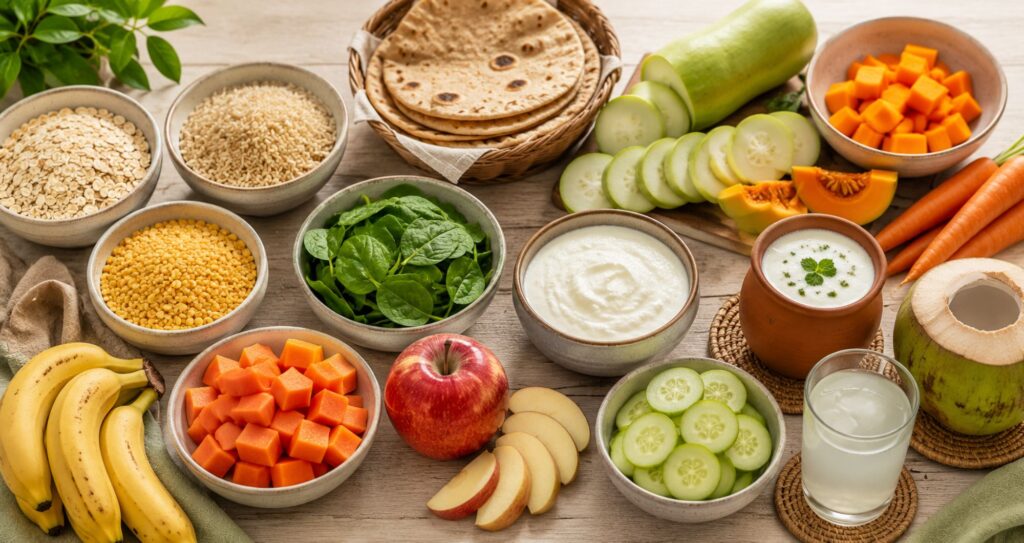
Certain foods are generally gentle on the stomach and may support healthy digestion.
You can include more of these in your meals if they suit you.
- Oats
- Brown rice
- Whole wheat chapati
- Moong dal
- Bottle gourd
- Pumpkin
- Carrot
- Spinach
- Banana
- Papaya
- Apple
- Cucumber
- Plain curd if tolerated
- Homemade buttermilk
- Coconut water in moderation
Simple home-cooked meals often work better than heavy restaurant meals.
Foods That Commonly Trigger Acidity
Not everyone reacts to the same foods.
Still, these are some of the most common triggers.
- Deep-fried foods
- Very spicy dishes
- Excess chilli
- Chocolate
- Coffee
- Strong tea
- Carbonated drinks
- Alcohol
- Heavy desserts
- Fast food
- Tomato-rich gravies if they trigger symptoms
- Citrus fruits if they cause discomfort
Instead of avoiding everything, keep a food diary for a couple of weeks.
You may notice clear patterns.
Daily Habits That Support Better Digestion
Food is only one part of the solution.
Your routine matters too.
These habits are worth trying.
- Eat meals at regular times.
- Choose smaller portions.
- Chew food slowly.
- Drink enough water during the day.
- Avoid lying down after meals.
- Walk for 10 to 15 minutes after lunch or dinner.
- Sleep for 7 to 8 hours each night.
- Stay physically active.
- Maintain a healthy body weight.
You don’t have to be perfect.
Small changes repeated every day often bring the biggest results.
Why Personalised Nutrition Matters
You’ve probably seen lists online telling you exactly what to eat.
The problem is that digestion is different for everyone.
One person may feel better after eating curd.
Another may not.
Some people tolerate coffee without any problem.
Others experience burning after one cup.
This is where guidance from the Best Dietitian in Bangalore becomes valuable.
Instead of guessing, you learn which foods work well for your body and which ones are better limited.
At Mitha Aahara, nutrition plans are designed around your lifestyle, food preferences, medical history, and health goals instead of following the same plan for everyone.
A Simple Acidity-Friendly Meal Plan
You don’t need fancy ingredients to support better digestion.
Simple, home-cooked meals are often enough.
Here’s an example of what a day could look like.
Breakfast
- Oats porridge with banana
- Vegetable poha
- Idlis with coconut chutney
Mid-Morning Snack
- Papaya
- Apple
- Pear
Lunch
- Brown rice or chapati
- Moong dal
- Bottle gourd, pumpkin, or carrot sabzi
- Plain curd if it suits you
Evening Snack
- Roasted chana
- Roasted makhana
- Buttermilk without extra spices
Dinner
- Vegetable khichdi
- Moong dal chilla
- Vegetable soup with chapati
Try to finish dinner at least two to three hours before bedtime.
That one habit alone helps many people.
Does Weight Loss Help Reduce Acidity?
If you’re carrying extra weight, especially around the abdomen, losing even a small amount may help reduce acid reflux.
Extra pressure on the stomach makes it easier for acid to move upward.
The goal isn’t to lose weight quickly.
It’s to build eating habits you can follow for years.
Crash diets usually create more problems than they solve.
A balanced nutrition plan works much better.
If you’re looking for support from the Best Dietitian in Bangalore, choose someone who focuses on sustainable lifestyle changes instead of quick fixes.
Common Myths About Acidity
There are plenty of myths about acidity.
Let’s clear up a few of them.
Myth 1: Milk Always Stops Acidity
Some people feel temporary relief after drinking milk.
Others notice that full-fat milk makes symptoms worse later.
Your body’s response matters more than general advice.
Myth 2: Only Spicy Food Causes Acidity
Spices may trigger symptoms in some people.
They aren’t the only cause.
Stress, poor sleep, large meals, obesity, smoking, and irregular eating habits also play a role.
Myth 3: Antacids Fix the Problem
Antacids reduce symptoms for a while.
They don’t always address the reason acidity keeps coming back.
Long-term relief usually comes from improving daily habits.
Myth 4: Skipping Meals Helps
Many people avoid food because they’re afraid of acidity.
Long gaps between meals can make symptoms worse.
Regular meals are usually easier on your digestive system.
Long-Term Tips for Permanent Acidity Relief

There isn’t one secret that works for everyone.
Small, consistent habits usually make the biggest difference.
Try these simple tips.
- Eat meals at regular times.
- Avoid overeating.
- Stay physically active.
- Drink enough water throughout the day.
- Maintain a healthy body weight.
- Sleep well every night.
- Reduce stress whenever possible.
- Avoid smoking and excessive alcohol.
- Keep track of foods that trigger your symptoms.
- Choose home-cooked meals more often.
These habits don’t just help with acidity.
They support your overall digestive health.
Why Choose Mitha Aahara?
At Mitha Aahara, nutrition plans are created around your daily routine, health conditions, and food preferences.
There isn’t a one-size-fits-all diet.
The goal is to help you understand your body, improve your eating habits, and make changes that fit your lifestyle.
Whether you’re dealing with frequent acidity, bloating, acid reflux, or weight concerns, a personalised nutrition plan can help you build healthier habits without unnecessary food restrictions.
Frequently Asked Questions
Can acidity be cured permanently?
Many people can significantly reduce recurring acidity by improving their diet, maintaining a healthy weight, managing stress, and identifying personal trigger foods. The right approach depends on the underlying cause.
Which foods help reduce acidity?
Foods that are commonly well tolerated include:
- Oats
- Banana
- Papaya
- Bottle gourd
- Pumpkin
- Brown rice
- Moong dal
- Whole grains
- Plain curd if tolerated
Individual tolerance may vary.
Is coffee completely banned?
Not always.
Some people can tolerate one small cup.
Others notice symptoms even after a small amount.
Pay attention to how your body responds.
Is walking after meals good for acidity?
A gentle walk for 10 to 15 minutes after meals may support digestion and reduce acid reflux.
Avoid intense exercise immediately after eating.
Does stress increase acidity?
Stress can affect digestion and may make existing symptoms feel worse.
Managing stress is an important part of long-term digestive health.
Should I skip dinner if I have acidity?
No.
Instead, choose a lighter dinner and eat it two to three hours before bedtime.
When should I consult a dietitian?
You may benefit from professional guidance if:
- Acidity happens several times a week.
- You rely on antacids regularly.
- You have diabetes, PCOS, thyroid disorders, or obesity along with acidity.
- You want a personalised nutrition plan.
Working with the Best Dietitian in Bangalore can help you identify your trigger foods and create a meal plan that suits your lifestyle.
Final Thoughts
Recurring acidity doesn’t have to become part of your daily life.
Simple changes like eating balanced meals, staying active, improving your sleep, and recognising your personal food triggers can help you feel better over time.
At Mitha Aahara, the focus is on helping you build healthy eating habits that support lasting digestive health and improve your quality of life.