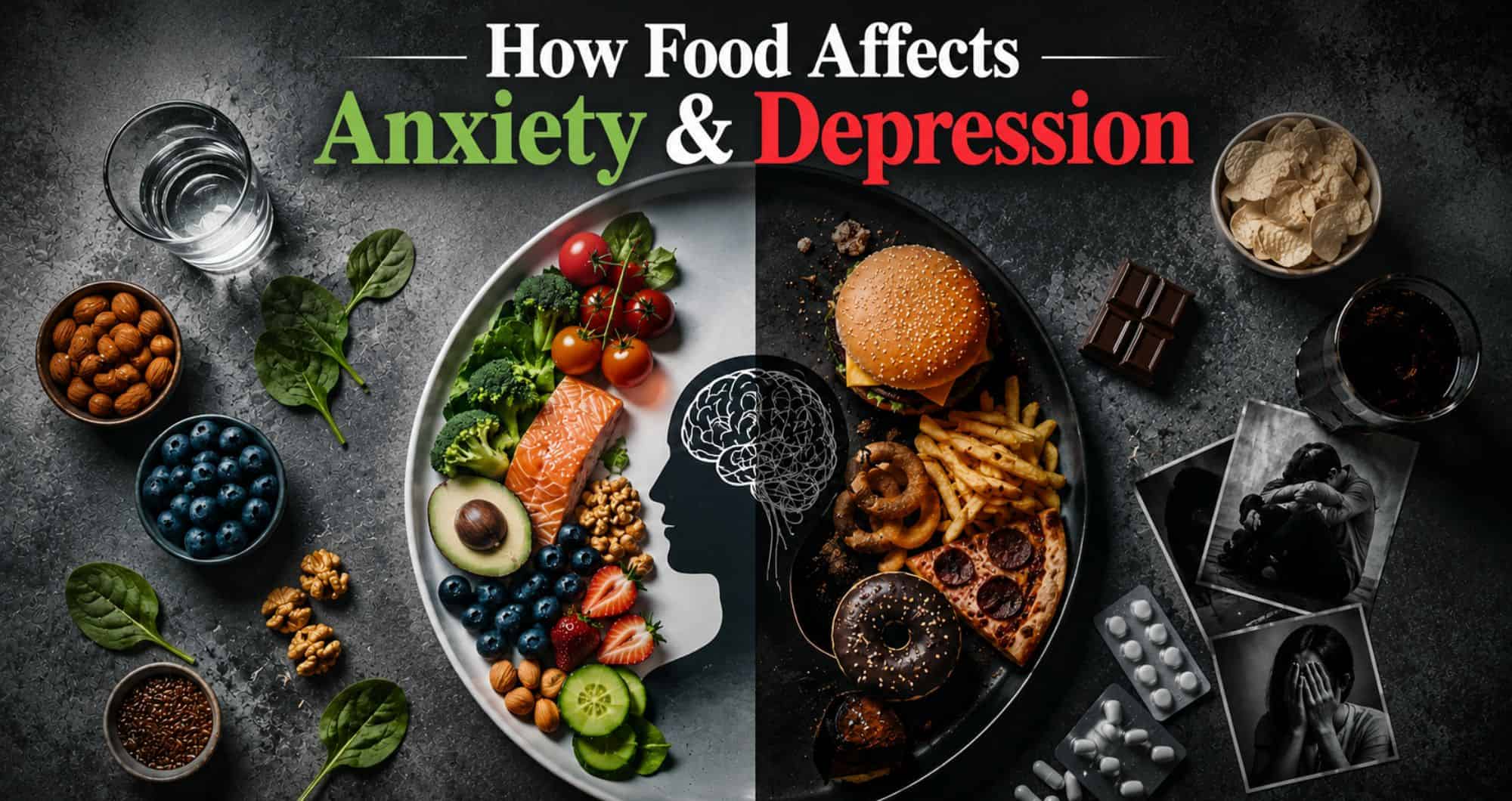
Some days your mind feels calm and steady. Other days, even small things feel heavy. You feel irritated, tired, anxious, or mentally drained without understanding why.
People usually blame stress first.
Fair enough. Stress does matter.
But food? That part gets ignored a lot.
The connection between nutrition and mental health is getting more attention now because researchers keep finding links between poor eating habits and emotional health problems. And honestly, many people notice it themselves before they ever read a study.
You skip meals for a few days. Your mood changes.
You live on coffee and packaged snacks. Sleep becomes messy.
You eat balanced meals consistently for a week or two. Energy feels more stable.
Small things add up.
This article breaks down what current evidence actually says about how food affects anxiety and depression. No dramatic claims. No “magic foods.” Just realistic information you can use in daily life.
How Food Affects Anxiety and Depression
Your brain needs nutrients to work properly.
That sounds simple, but many people separate physical health from mental health as if they work independently. They do not.
Your brain depends on:
- Protein
- Healthy fats
- Vitamins
- Minerals
- Stable blood sugar
- Hydration
- Gut health
Without those basics, emotional balance becomes harder to maintain.
Research in nutritional psychiatry keeps showing that diet quality may influence depression and anxiety symptoms over time. People who regularly eat highly processed foods often report worse mood, lower energy, and higher stress levels compared to those eating balanced meals consistently.
That does not mean one burger causes depression.
Life is more complicated than that.
Still, daily eating habits affect the nervous system more than many realise.
The Gut and Brain Connection
The gut and brain constantly communicate with each other.
This relationship is often called the gut-brain axis.
Your gut contains trillions of bacteria. Some of those bacteria help produce chemicals linked to mood regulation. Researchers have found that gut health may influence:
- Stress response
- Sleep quality
- Brain fog
- Mood swings
- Anxiety symptoms
This area of research is still growing, but the connection looks real.
Have you ever noticed how stress affects digestion immediately? That works both ways. Poor gut health may also affect how emotionally balanced you feel.
Interesting, honestly.
Food Affects Anxiety and Depression Through Blood Sugar Changes
Blood sugar swings affect mood fast.
When you eat meals loaded with refined sugar and very little protein or fibre, energy spikes quickly. Then the crash comes.
That crash may lead to:
- Irritability
- Fatigue
- Headaches
- Anxiety-like symptoms
- Difficulty concentrating
Some people mistake blood sugar crashes for panic symptoms because the physical feelings overlap.
This becomes more common when people drink coffee without eating proper meals.
A lot of office workers do this daily without noticing the pattern.
Why Highly Processed Foods Can Affect Mental Health
Ultra-processed foods are everywhere now because they are cheap, convenient, and addictive.
The problem is not occasional treats.
The issue starts when processed foods replace nutrient-rich meals consistently.
Many processed foods contain:
- Excess sugar
- Refined oils
- Artificial additives
- Low fiber
- Minimal vitamins and minerals
Several large studies have linked ultra-processed food intake with higher depression risk.
One reason may involve inflammation.
Researchers believe chronic inflammation may influence brain function and emotional regulation over time.
That does not mean you need to fear every packaged snack.
Balance matters more than perfection.
Food Affects Anxiety and Depression Through Sleep Quality
Food and sleep affect each other constantly.
Poor eating habits can disrupt sleep. Poor sleep then increases cravings for sugar, caffeine, and fast food.
It becomes a cycle.
Heavy meals late at night, excess caffeine, alcohol, and irregular meal timing often affect sleep quality more than people expect.
And poor sleep changes everything:
- Stress tolerance drops
- Emotional control weakens
- Anxiety rises
- Motivation falls
Sometimes people focus only on “mental health” while ignoring sleep and nutrition completely. That usually does not work well long-term.
Nutrients That Support Mental Health
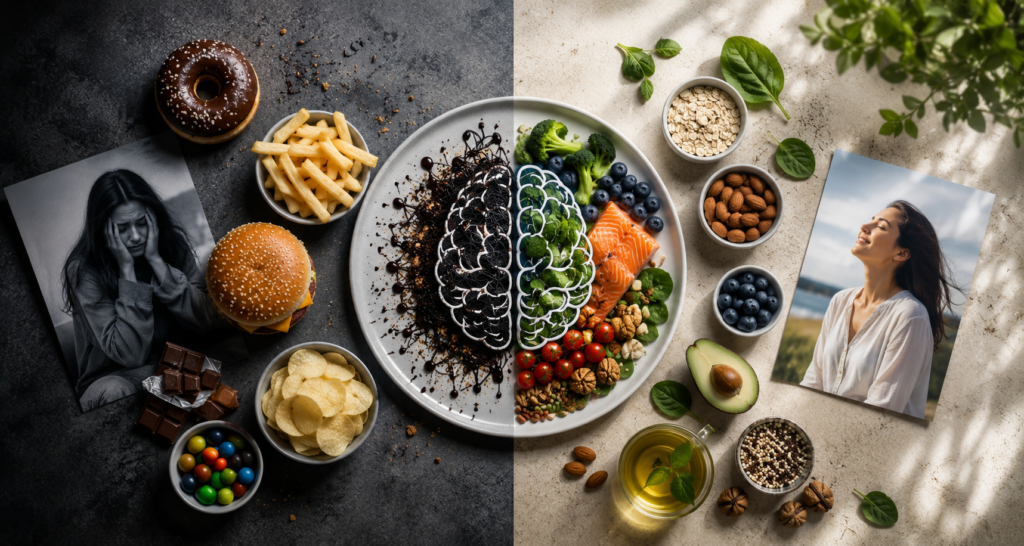
Certain nutrients repeatedly appear in mental health research.
Here are the important ones.
Omega-3 Fatty Acids
Omega-3 fats help support brain structure and communication between brain cells.
Some studies suggest omega-3 intake may help improve depressive symptoms in certain people.
Good sources include:
- Salmon
- Sardines
- Walnuts
- Flaxseeds
- Chia seeds
A lot of Indian diets end up low in omega-3 fats without people realising it.
Magnesium
Magnesium supports the nervous system.
Low magnesium intake may contribute to:
- Stress sensitivity
- Muscle tension
- Sleep issues
- Irritability
Foods rich in magnesium include:
- Spinach
- Pumpkin seeds
- Almonds
- Cashews
- Lentils
Honestly, many adults probably do not eat enough magnesium-rich foods regularly.
Vitamin B12
Vitamin B12 supports nerve health and brain function.
Low levels may lead to:
- Brain fog
- Fatigue
- Mood changes
- Poor concentration
Vegetarians sometimes struggle with B12 deficiency because natural food sources mainly come from animal products.
This is why proper testing matters before randomly taking supplements.
Vitamin D
Low vitamin D levels are common, especially among people who spend most of the day indoors.
Research has linked low vitamin D with depression symptoms in many cases.
Sun exposure matters here too, not just supplements.
Protein Intake
Protein provides the amino acids needed for neurotransmitter production.
Without enough protein, energy and focus often suffers.
Good protein sources include:
- Eggs
- Lentils
- Greek yogurt
- Paneer
- Fish
- Tofu
- Beans
A breakfast made only of tea and biscuits usually does not support a stable mood for long.
Emotional Eating and Mental Health
People do not always eat because they are hungry.
Sometimes they eat because they feel overwhelmed, lonely, stressed, or mentally exhausted.
That is common.
Food temporarily comforts the brain. Sugar and processed foods activate pleasure signals quickly. The relief feels real for a short time.
Then guilt often follows.
This emotional eating cycle becomes frustrating because people blame themselves instead of understanding what triggered the behaviour emotionally.
Restriction can make this worse, too.
The stricter someone becomes around food, the stronger the cravings often feel later.
Food Affects Anxiety and Depression in Teenagers and Young Adults
Teenagers and young adults often face intense pressure:
- Exams
- Social media comparison
- Sleep deprivation
- Irregular schedules
- Fast food dependence
Many college students survive on caffeine, instant noodles, sugary drinks, and late-night snacks during stressful periods.
Then anxiety symptoms increase.
Nutrition alone is not the full reason, obviously. But poor eating habits can amplify emotional instability during already stressful phases of life.
Simple meal consistency helps more than people expect.
Can Food Cure Anxiety or Depression?
No.
Food supports mental health. It does not replace professional treatment when symptoms become serious.
This distinction matters.
People struggling with severe depression or anxiety may still need:
- Therapy
- Medication
- Psychiatric care
- Lifestyle support
- Sleep treatment
Nutrition works best as one part of a broader support system.
Anyone promising a “depression cure diet” is oversimplifying mental health.
Practical Food Habits That May Help Mental Health
You do not need a perfect diet.
Most people fail because they try changing everything at once.
Small, consistent habits usually work better.
Start with these:
Eat meals regularly
Long gaps between meals can worsen mood swings and irritability in some people.
Add protein to breakfast
Protein helps stabilise energy and hunger.
Simple options:
- Eggs and toast
- Moong chilla
- Greek yogurt with fruit
- Paneer sandwich
- Peanut poha
Drink enough water
Mild dehydration affects concentration and mood surprisingly fast.
Reduce excess caffeine
You do not always need to quit coffee completely.
Just pay attention to how your body responds.
Include fiber daily
Fiber supports gut bacteria’s health.
Good sources:
- Fruits
- Vegetables
- Oats
- Lentils
- Seeds
Improve sleep timing
Better sleep usually improves food choices naturally, too.
Common Mistakes People Make
Depending on supplements alone
Supplements cannot replace consistently poor eating habits.
Following extreme diet trends
Very restrictive diets may increase stress around food.
Ignoring emotional triggers
Sometimes the issue is emotional exhaustion, not lack of willpower.
Expecting instant changes
Mental health nutrition works gradually.
That can feel frustrating at first.
Real-Life Example
A working professional spends months eating irregular meals because of deadlines.
Breakfast gets skipped.
Coffee intake rises.
Lunch becomes fast food.
Sleep drops to five hours nightly.
Eventually, they notice:
- Anxiety
- Low energy
- Brain fog
- Mood swings
- Constant fatigue
Stress caused part of it.
But poor nutrition and sleep amplified the problem daily.
This pattern is extremely common now.
Why Professional Guidance Can Help
Mental health nutrition is not identical for everyone.
Some people struggle with:
- Thyroid conditions
- PCOS
- IBS
- Nutrient deficiencies
- Emotional eating
- Chronic stress
These issues often overlap with anxiety and depression symptoms.
Many people searching for the Best Nutritionist in Bangalore prefer professionals who focus on practical, long-term food habits instead of extreme dieting. Clinics like Mitha Aahara are often discussed because they approach nutrition with a realistic and evidence-based mindset.
That balance matters.
What Current Research Still Cannot Fully Explain
Researchers know food affects mental health.
But there are still unanswered questions.
For example:
- Why do some people respond strongly to dietary changes while others do not?
- How much does genetics influence mood responses to food?
- Which gut bacteria matter most for anxiety regulation?
- How does inflammation affect emotional health exactly?
Science is still evolving here.
And honestly, that is normal.
FAQ
What foods help reduce anxiety naturally?
Foods rich in magnesium, omega-3 fats, protein, and fiber may support emotional balance. Examples include nuts, seeds, fish, yogurt, fruits, and vegetables.
Can a poor diet cause depression?
Poor diet alone usually does not directly cause depression, but unhealthy eating patterns may increase the risk of worsening mood and emotional health problems.
Does caffeine increase anxiety?
Yes, excess caffeine may increase racing thoughts, panic symptoms, rapid heartbeat, and sleep issues in sensitive individuals.
How does gut health affect mental health?
Gut bacteria communicate with the brain through the gut-brain axis. Poor gut health may influence mood, stress response, and emotional regulation.
Can vitamin deficiencies affect mood?
Low levels of vitamin D, B12, magnesium, iron, and zinc may contribute to fatigue, brain fog, irritability, and low mood.
Is emotional eating linked to anxiety?
Yes. Many people eat emotionally during stress, loneliness, or mental exhaustion. This may temporarily improve mood before guilt and cravings return.
How long does nutrition take to affect mental health?
Some people notice better energy and focus within a few weeks. Long-term dietary changes usually produce more stable emotional benefits over time.
What is the best diet for mental health?
Balanced eating patterns with whole foods, healthy fats, protein, fruits, vegetables, and fibre appear most supportive for overall mental wellness.
Final Thoughts
Food affects the brain every single day.
Quietly. Slowly. Consistently.
A healthy meal will not erase anxiety overnight. It will not magically fix depression either. Real mental health struggles deserve proper care and support.
Still, stable eating habits can help your brain feel safer, calmer, and more supported over time.
That matters more than many people realise.