
Losing weight on GLP-1 medication can change your appetite. You may feel full sooner, feel less hungry, or find large meals uncomfortable.
Choosing the right Indian Foods to eat on GLP-1 for Healthy Weight Loss can help you meet your nutritional needs while working towards your weight-loss goals.
Medications such as semaglutide and liraglutide can support weight management when prescribed appropriately. Pairing treatment with balanced Indian meals rich in protein, fibre, vitamins, and minerals can help support your overall health.
So, what should you eat while taking GLP-1 medication?
The good news is that you do not need expensive imported foods or a completely different diet. Everyday Indian foods such as dal, curd, paneer, vegetables, and oats can help you meet your nutritional needs.
Let’s look at seven practical options and how you can include them in your daily meals.
How Does GLP-1 Medication Affect Your Diet?
GLP-1 medications act on pathways involved in appetite, blood sugar regulation,n and digestion. Some medicines in this group also slow stomach emptying.
As a result, you may notice:
- Feeling full sooner than before
- Reduced hunger between meals
- Nausea or digestive discomfort
- Constipation or changes in bowel habits
- Difficulty eating your usual portion sizes
These effects vary from person to person and depend partly on the medication and dose.
When your appetite decreases, eating enough protein, fibre, vitamins and minerals can become more difficult. You might eat less overall but still need to meet your body’s nutritional requirements.
The aim is to choose foods that provide useful nutrition in manageable portions.
7 Powerful Indian Foods to Eat on GLP-1 for Healthy Weight Loss
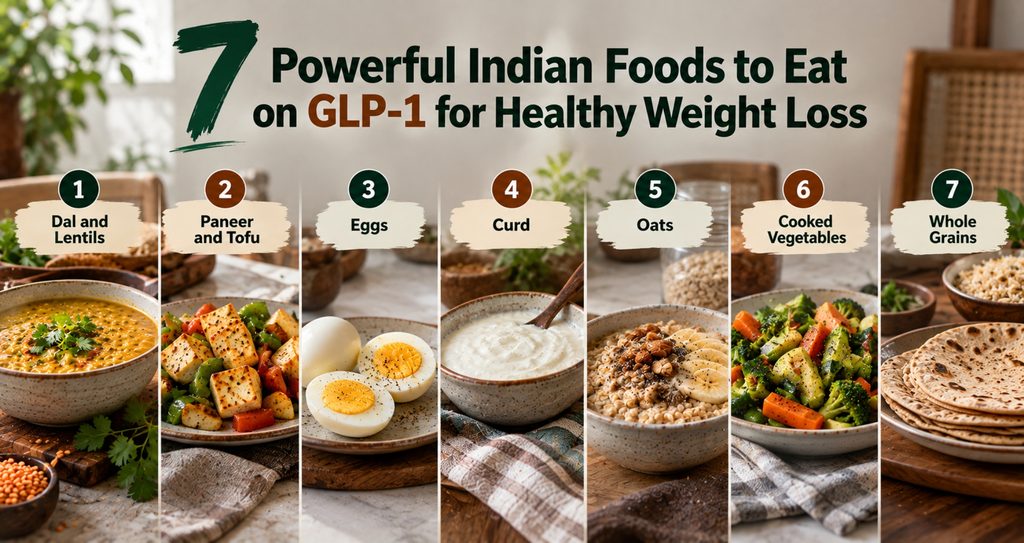
1. Dal and Lentils for Protein and Fibre
Dal is a familiar part of Indian meals, and it can be particularly useful when you want simple, nutritious food.
Moong dal, masoor dal, toor dal and other lentils provide plant protein, fibre and several essential nutrients. They can help make a meal more balanced without requiring complicated recipes.
How to include dal in your diet
- Have a small bowl of moong dal with rice and cooked vegetables.
- Add masoor dal to a simple lunch.
- Try soft moong dal khichdi when a lighter meal feels easier to tolerate.
If you experience bloating, start with portions you tolerate comfortably. Large servings of legumes may increase gas in some people.
You can also experiment with different cooking methods and gradually increase fibre intake.
2. Paneer and Tofu for Protein
Protein deserves attention when you are losing weight. Eating too little can make it harder to maintain muscle, especially when weight loss is substantial.
Paneer and tofu are convenient options for Indian vegetarian diets. Paneer provides protein and calcium, while tofu provides plant protein and may also supply calcium, depending on how it is prepared.
Simple meal ideas include:
- Lightly cooked paneer bhurji
- Tofu with cooked vegetables
- Paneer cubes added to a vegetable-based meal
- Tofu curry with a small serving of rice
Try not to rely on deep-fried paneer or rich, cream-heavy gravies every day. These meals may feel heavy when GLP-1 medication already makes you feel full quickly.
Your protein requirements depend on factors such as body weight, age, activity, kidney health, and overall medical condition. A dietitian can help you work out a suitable target.
3. Eggs for an Easy Protein-Rich Meal
If you eat eggs, they can be a practical addition to your GLP-1 diet.
Eggs provide high-quality protein and nutrients such as vitamin B12 and choline. They are also easy to prepare in different ways.
You could try:
- One or two boiled eggs, depending on your nutritional needs
- A vegetable omelette
- Scrambled eggs with cooked vegetables
- Eggs with a small portion of whole-grain toast
The important thing is to look at your complete meal rather than focusing on one food.
For example, eggs with vegetables and toast may provide a more balanced meal than eggs alone. If you feel full quickly, start with a smaller portion and eat according to your tolerance.
If you do not eat eggs, dal, tofu, paneer,r and other protein-rich foods can help you meet your needs.
4. Curd for Protein and Calcium
Curd is easy to find in Indian households and can fit into many meals.
It provides protein and calcium, although the amount varies by product. Some curd contains live cultures, but not every product has the same bacterial strains or quantities.
You can include plain curd with lunch, serve it alongside a mild meal, or use it as the base for a simple raita.
A few practical tips:
- Choose plain curd rather than varieties with added sugar.
- Try a small portion if large meals make you uncomfortable.
- Pair curd with cooked vegetables and a suitable source of protein.
- Choose lactose-free alternatives if lactose causes digestive symptoms.
Curd is not a treatment for GLP-1 side effects, but it can be a useful part of a balanced diet.
5. Oats for a Fibre-Rich Breakfast
Oats contain soluble fibre, including beta-glucan. They can support normal bowel function and contribute to a satisfying breakfast.
For people taking GLP-1 medication, fibre intake needs a little thought. Increasing fibre too quickly may worsen bloating or discomfort, especially if you are already struggling with digestive symptoms.
Start with a comfortable serving of oats and adjust gradually.
Try these breakfast combinations:
- Oats cooked in milk, with nuts if tolerated
- Savoury oats with carrots and peas
- Oats with plain curd, if the combination suits your digestion
- Oats with a boiled egg or another protein source on the side
Drink enough fluids throughout the day, unless your healthcare professional has advised you to restrict fluids.
If you have persistent constipation, do not assume that eating more fibre alone will solve it. Your medication, fluid intake and other health factors may also need attention.
6. Cooked Vegetables for Vitamins and Minerals
Vegetables provide fibre, vitamins, minerals and other useful plant compounds.
Carrots, beans, bottle gourd, pumpkin, spinach and other seasonal vegetables can fit into a balanced Indian diet.
Cooked vegetables may feel easier to tolerate than large raw salads when you experience fullness or bloating. This is not true for everyone, so pay attention to your own response.
Some easy options are:
- Lauki sabzi with dal
- Cooked carrots and beans with paneer
- Pumpkin with a small serving of rice
- Spinach cooked with lentils
- Mixed vegetable soup with a protein-rich accompaniment
You do not need to eat a huge bowl of vegetables at every meal. Start with manageable portions and increase them as tolerated.
The goal is to maintain variety without making meals uncomfortable.
7. Whole Grains for Energy and Balanced Meals
Rice and roti can still have a place in your diet while taking GLP-1 medication.
You do not need to eliminate carbohydrates to lose weight. Your body uses carbohydrates for energy, and whole grains can also contribute fibre and other nutrients.
Depending on your preferences and tolerance, you can include:
- Whole-wheat roti
- Oats
- Brown rice
- Millets such as jowar and ragi
- Regular rice in suitable portions
For example, a meal containing dal, cooked vegetables and rice can provide carbohydrates, protein and fibre.
You can adjust the portion according to your appetite, activity level and nutritional needs. There is no single rice or roti portion that works for everyone.
How to Plan a Simple Indian Diet While Taking GLP-1
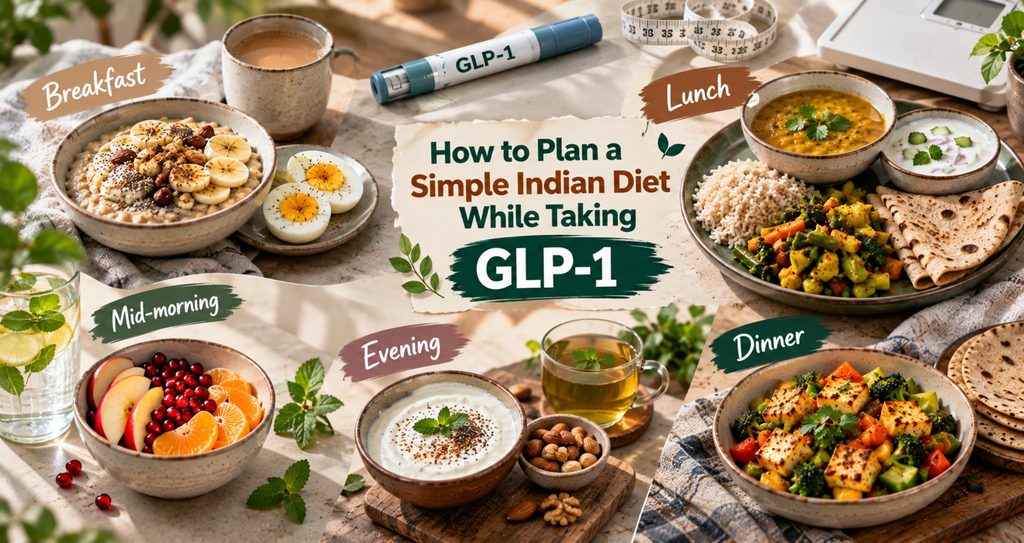
You do not need to follow a complicated meal plan. Start with familiar foods and build meals around the nutrients you need.
Here is an example of how a day might look.
| Meal | Example food choices |
| Breakfast | Oats with milk, or eggs with whole-grain toast |
| Mid-morning | Fruit, if hungry and comfortable |
| Lunch | Dal, rice or roti, cooked vegetables and curd |
| Evening | Plain curd or a small protein-rich snack |
| Dinner | Paneer or tofu with vegetables and roti |
This is only an example, not a personalised prescription. Your portions and meal timing may need to change based on appetite, medication effects, activity,ty and medical needs.
If you feel full after a few bites, avoid forcing yourself to finish a large meal. Smaller meals may be more comfortable for some people.
Try to eat slowly and stop when comfortably full. Very large meals and high-fat foods may worsen nausea or fullness for some people.
Common Diet Mistakes to Avoid on GLP-1 Medication
Even when your appetite decreases, your body still needs adequate nutrition. Watch out for these common mistakes.
Skipping protein
Eating very little protein can make it harder to maintain muscle during weight loss. Include suitable protein sources throughout the day.
Eating too little overall
Reduced hunger can make it easy to undereat. If you regularly struggle to eat enough, speak with your prescribing clinician or dietitian.
Increasing fibre too quickly
A sudden increase in salads, raw vegetables or legumes may worsen bloating. Increase fibre gradually and drink enough fluid when medically appropriate.
Ignoring nausea and constipation
Persistent symptoms deserve attention. Your healthcare professional may need to review your medication, hydration, diet or other possible causes.
Following extreme weight-loss diets
Combining GLP-1 medication with severe calorie restriction can make nutritional deficiencies and muscle loss more likely. Avoid extreme diets unless a qualified healthcare professional has specifically prescribed and is monitoring an appropriate plan.
Why Work With a Dietitian During GLP-1 Treatment?
GLP-1 treatment can affect people differently. One person may tolerate most foods comfortably, while another may struggle with nausea, constipation, or early fullness.
A personalised nutrition plan can help you choose suitable foods, meet your protein needs, and adjust meal sizes without unnecessary restriction.
If you are searching for the Best Dietitian in Bangalore, look for a qualified professional who understands medical weight management, GLP-1 treatment, digestive symptoms and nutritional assessment.
At Mitha Aahara, nutrition support can be tailored to your food preferences, routine and health goals. A dietitian can also help you review your eating pattern as your appetite and weight change.
Your prescribing clinician should remain involved in decisions about medication, dosage,e and persistent side effects. Nutrition support works alongside medical care rather than replacing it.
Frequently Asked Questions
1. What are the best Indian foods to eat on GLP-1 medication?
Dal, paneer, tofu, eggs, plain curd, oats, cooked vegetables, and whole grains are useful options. The best choices depend on your nutritional needs, food preferences, and digestive tolerance.
2. Can I eat rice while taking GLP-1 medication?
Yes. Rice can be part of a balanced diet. Pair it with protein-rich foods and vegetables, and choose a portion that suits your appetite and nutritional needs.
3. How much protein should I eat while taking GLP-1?
There is no single target for everyone. Your protein needs depend on your body size, age, activity, medical conditions, and weight-loss goals. A qualified dietitian can help you determine an appropriate amount.
4. What should I eat if GLP-1 medication makes me nauseous?
Some people tolerate smaller, simpler meals better than large or high-fat meals. Try eating slowly and avoiding foods that clearly worsen your symptoms. Contact your healthcare professional if nausea persists or affects your ability to eat and drink.
5. Can I follow a vegetarian diet while taking GLP-1?
Yes. A vegetarian diet can provide adequate nutrition when planned well. Include suitable combinations of dal, beans, tofu, paneer, curd, nuts and seeds according to your needs and tolerance.
Make Your GLP-1 Diet Work for Your Everyday Life
You do not need to give up Indian food to manage your weight while taking GLP-1 medication.
Start with simple meals, include protein regularly, add fibre gradually,y and pay attention to how your body responds. Most importantly, avoid eating so little that you struggle to meet your nutritional needs.
A balanced approach can help you work towards healthy weight loss while supporting your overall health.
If you need help planning meals around your appetite, preferences,es and treatment, consider speaking with a qualified dietitian at Mitha Aahara in Bangalore.